Mtn View Nissan of Chattanooga

Blog

All Service Brake New Inventory Nissan Fluid Service Oil Change Tires & Wheels Transmission & Fluids Warranty
What Is Included in Nissan Factory Scheduled Maintenance
in Service

What Is Included in Nissan Factory Scheduled Maintenance?

Nissan factory scheduled maintenance includes engine oil and filter replacements, tire rotations, brake system inspections, fluid level verifications, and comprehensive multi-point vehicle checks at regular intervals. As mileage accumulates, scheduled visits add vital component replacements, including engine air filters, in-cabin microfilters, brake fluid flushes, and spark plug installations, alongside drivetrain inspections. Adhering to these manufacturer guidelines preserves vehicle reliability, protects powertrain performance, and upholds your factory warranty protections. Every model relies on tailored service sequences to sustain its mechanical health across varying driving conditions. For example, a 2027 Nissan Rogue powered by the 1.5L engine requires strict adherence to clean synthetic oil and fresh filter media to protect its turbocharger and variable compression components. A 2026 Nissan Altima operating with the 2.5L engine pairs routine oil changes with strict tire rotations to balance front-wheel tread wear. Meanwhile, a 2027 Nissan Frontier running a 3.8L V6 engine and a 9-speed automatic transmission demands periodic inspections of its transfer case, propeller shaft, and rear differential assemblies. Our certified technicians carry out each scheduled task according to original factory specifications. Drivers can find complete certified care by visiting our team at 2100 Market St in downtown Chattanooga. To confirm your vehicle's next recommended checklist or ask about current service needs, give our service department (423) 756-1500. Table of Contents What Are the Standard Factory Scheduled Maintenance Intervals for Nissan Vehicles? What Is Performed During Nissan's 30,000-Mile Factory Scheduled Maintenance? Why Does a Nissan CVT Require Genuine Nissan NS-2 or NS-3 Fluid? Dealer vs. Independent Shop: Which Is Right for Nissan Scheduled Maintenance? Nissan Factory Maintenance: Costs, Prepaid Plan Coverage, and Service Options How to Schedule Certified Nissan Factory Maintenance in Chattanooga Common Factory Maintenance Inquiries Keep Your Nissan Operating at Factory Standards What Are the Standard Factory Scheduled Maintenance Intervals for Nissan Vehicles? Standard Nissan factory maintenance follows a recurring cycle every 5,000 to 7,500 miles or every 6 months, whichever occurs first. Minor service appointments focus on baseline fluid changes, tire balancing checks, and chassis inspections, while major service milestones land at 15,000, 30,000, 60,000, and 105,000 miles. Because requirements vary depending on engine design, towing demands, and environmental factors, Nissan directs drivers to the owner's manual for model-specific requirements. Driving habits dictate whether your vehicle operates under normal or severe operating schedules. Frequent short trips, stop-and-go traffic, driving in dusty conditions, or traversing steep inclines—such as climbing the ridge routes around Lookout Mountain—place higher thermal loads on engine oil and transmission fluids. Under severe operating conditions, maintenance intervals shorten to protect critical internal components from accelerated wear. Key baseline intervals encompass: 5,000 to 7,500 Miles (or 6 Months): Replace engine oil and Genuine Nissan oil filter, rotate all four tires, inspect tire tread wear and pressure, inspect brake pads and rotors, and top off essential operating fluids. 15,000 Miles (or 12 Months): Complete all 5,000-mile services, install a new cabin microfilter, inspect suspension linkages, steering gear, exhaust systems, and brake lines. 60,000 Miles (or 48 Months): Repeat comprehensive intermediate checks, replace engine air and cabin filters, inspect drive belts, and test engine cooling mixture strength. 105,000 Miles: Replace spark plugs on compatible gasoline engines, inspect ignition wiring, and perform a complete engine coolant system exchange. What Is Performed During Nissan's 30,000-Mile Factory Scheduled Maintenance? The 30,000-mile service is a major maintenance milestone that replaces wear-heavy filtration media and hydraulic fluids while subjecting the complete chassis and powertrain to thorough mechanical inspection. This service replaces the engine oil, engine oil filter, engine air filter, in-cabin microfilter, and hydraulic brake fluid. Technicians also rotate the tires and conduct an extensive multi-point inspection covering the steering, suspension, exhaust, fuel delivery, and cooling systems. Replacing hydraulic brake fluid at 30,000 miles is vital for vehicle safety. Conventional brake fluid naturally absorbs atmospheric moisture over time, which lowers its boiling point and introduces internal corrosion risks into calipers and anti-lock braking actuators. Flushing the system with fresh fluid restores firm pedal pressure and ensures heat resistance during rapid descents down valley highways. Concurrently, replacing the engine air filter restores unrestricted airflow to the intake tract, maintaining clean combustion and peak fuel economy. Swapping the in-cabin microfilter traps seasonal pollen, road dust, and particulate matter before it reaches the interior ventilation system. Technicians also check the cooling system hoses, inspect CV boots for tears or grease loss, measure brake friction lining thickness, and evaluate drive axle joints for play. Why Does a Nissan CVT Require Genuine Nissan NS-2 or NS-3 Fluid? Nissan continuously variable transmissions require Genuine Nissan NS-2 or NS-3 fluid because their steel drive belts and variable pulleys depend on proprietary friction modifiers that conventional transmission fluids do not provide. Standard automatic transmission fluid alters the coefficient of friction between the steel belt and the conical pulley sheaves. Using incorrect lubricants leads to internal belt slippage, extreme operating temperatures, accelerated surface scoring, and catastrophic transmission failure. The precise fluid designation depends on the transmission model and vehicle generation. Compact and midsize platforms utilizing modern Xtronic continuously variable transmissions, such as late-model configurations of the Nissan Rogue or Nissan Altima, require advanced Nissan NS-3 CVT Fluid. Earlier transmission designs specify Nissan NS-2 CVT Fluid, and these two formulations are not interchangeable. Our parts specialists maintain factory supplies for DIY enthusiasts and local owners through our dedicated Nissan parts department. Beyond basic lubrication, Nissan CVT fluid serves as a hydraulic coupling medium that powers pulley adjustment actuators under precise electronic control. Standard multi-vehicle fluids cannot replicate the thermal stability, anti-foaming properties, or shear resistance required by high-pressure continuous variation. Certified technicians verify fluid quality and operating condition using specialized digital diagnostics during regular factory checkups. Dealer vs. Independent Shop: Which Is Right for Nissan Scheduled Maintenance? Authorized Nissan dealerships provide factory-certified technicians, vehicle-specific diagnostic scan tools, proprietary software recalibrations, and exclusive access to Genuine Nissan parts. While independent shops can manage basic fluid changes and routine filter swaps, they often lack the manufacturer diagnostic architecture required for complex vehicle subsystems. Modern driver-assist technologies, high-pressure turbochargers, and continuously variable transmissions demand factory tools to service properly. Advanced driver assistance technologies require specialized calibration that aftermarket shops rarely support. When suspension alignment or steering components are serviced on vehicles equipped with Nissan Safety Shield 360 or ProPILOT Assist, technicians must recalibrate millimeter-wave radar sensors and windshield-mounted optical cameras using specialized target boards. Independent facilities lacking this manufacturer alignment equipment cannot verify sensor calibration after major chassis work. Furthermore, dealership service records sync directly with Nissan's centralized North American warranty database. If a factory recall, service campaign, or warranty claim arises, having an unbroken electronic service history logged by factory-trained technicians simplifies warranty verification. Choosing authorized maintenance ensures every replacement seal, filter, and fluid meets strict original-equipment specifications. Nissan Factory Maintenance: Costs, Prepaid Plan Coverage, and Service Options Nissan maintenance costs vary by mileage tier, ranging from basic intermediate fluid services to comprehensive major inspections. To make recurring maintenance costs predictable, the Nissan Security+Plus Prepaid Maintenance plan locks in scheduled maintenance expenses in advance. Depending on the selected plan tier, coverage encompasses oil and filter changes, tire rotations, fluid top-offs, multi-point inspections, and scheduled mechanical replacements like engine air filters, brake fluid flushes, and spark plugs. Prepaid plans protect owners against parts and labor price inflation while ensuring all replacements utilize Genuine Nissan parts installed by certified technicians. For vehicles not covered under a comprehensive plan, programs like the official Nissan 5-pack oil-and-filter agreement offer economical routine care. The 5-pack agreement covers oil and filter replacements for up to 30 months or 25,000 miles, whichever comes first, using factory-approved oil and filters. Every routine maintenance visit also includes a complimentary multi-point inspection. Technicians measure brake pad thickness, test battery cold-cranking health, assess tire tread depths, and check belt conditions. Drivers looking to maintain their vehicle's recommended maintenance schedule can easily book a service appointment online to reserve a dedicated service bay. How to Schedule Certified Nissan Factory Maintenance in Chattanooga Local owners can schedule factory maintenance appointments 24/7 through our online portal, selecting their exact model, mileage, and required services with ease. For basic maintenance needs like oil changes, tire rotations, wiper blade installations, and multi-point health checks, our service center provides Nissan Express Service, allowing drivers to receive factory care without needing an advance appointment. Whether you commute along the Tennessee River or manage daily drives through urban neighborhoods, keeping up with factory intervals preserves your vehicle's mechanical integrity. Our service center features dedicated bays, factory diagnostic tools, and certified technicians ready to maintain your vehicle. To plan your visit or discuss scheduled maintenance requirements, reach out to our team at (423) 756-1500. When you are ready for maintenance, use these easy turn-by-turn directions to navigate directly to our Chattanooga service center. Common Factory Maintenance Inquiries Q: Can I use aftermarket motor oil in my turbocharged Nissan engine? Yes, aftermarket engine oil may be used provided it meets the exact viscosity rating, API service classification, and ILSAC specifications detailed in your owner's manual. High-output turbocharged powerplants require oils with high thermal resistance to prevent sludge accumulation in turbocharger oil feed lines. Using Genuine Nissan motor oil guarantees the correct additive package to protect internal engine components. Q: Does missing a single scheduled service void my factory powertrain warranty? Missing a single maintenance interval does not automatically void your complete factory warranty, but it can complicate future claims. If an engine or transmission component fails and records show the failure stemmed from neglected lubrication or contaminated fluid, repairs related to that specific defect may be denied. Keeping organized receipts and service logs protects your warranty status. Q: What should I do if my Nissan experiences a roadside breakdown? If your vehicle suffers a mechanical breakdown or flat tire, utilize Nissan Roadside Assistance for authorized support and towing coordination. Covered vehicles under the basic factory warranty receive emergency towing, jump-starts, flat-tire changes, and lockout assistance. You can contact official emergency assistance directly by calling Nissan Roadside Assistance: 1-800-225-2476. Q: How do driving conditions in hilly areas affect brake service intervals? Frequent driving along steep descents and winding ridge topography accelerates friction wear on brake pads and rotors compared to flat highway travel. Extended downhill braking increases operational heat, which breaks down brake pad compound faster and degrades brake fluid sooner. Vehicles regularly traveling mountainous terrain should undergo visual pad measurements and rotor checks at every 5,000-mile interval. Q: Are tire rotations strictly necessary if all four tires look evenly worn? Regular tire rotations every 5,000 to 7,500 miles are essential even if visual wear appears balanced across the tread face. Front tires manage steering friction, cornering loads, and the majority of braking force, causing shoulder tread wear that differs significantly from rear tires. Rotating tires according to factory patterns balances tread wear, supports all-wheel drive performance, and maximizes tire lifespan. Keep Your Nissan Operating at Factory Standards Protecting your Nissan's long-term performance requires timely care, correct factory fluids, and certified technical oversight. Our factory-trained team at Mtn View Nissan of Chattanooga is equipped with the specialized diagnostic systems, proprietary tools, and genuine components needed to maintain your vehicle according to strict manufacturer engineering standards. Schedule your factory maintenance appointment today to ensure dependable performance for every journey ahead. © 2026 Mtn View Nissan of Chattanooga. All rights reserved.

Read More
What Fluid Maintenance Does a Nissan Vehicle Require

What Fluid Maintenance Does a Nissan Vehicle Require?

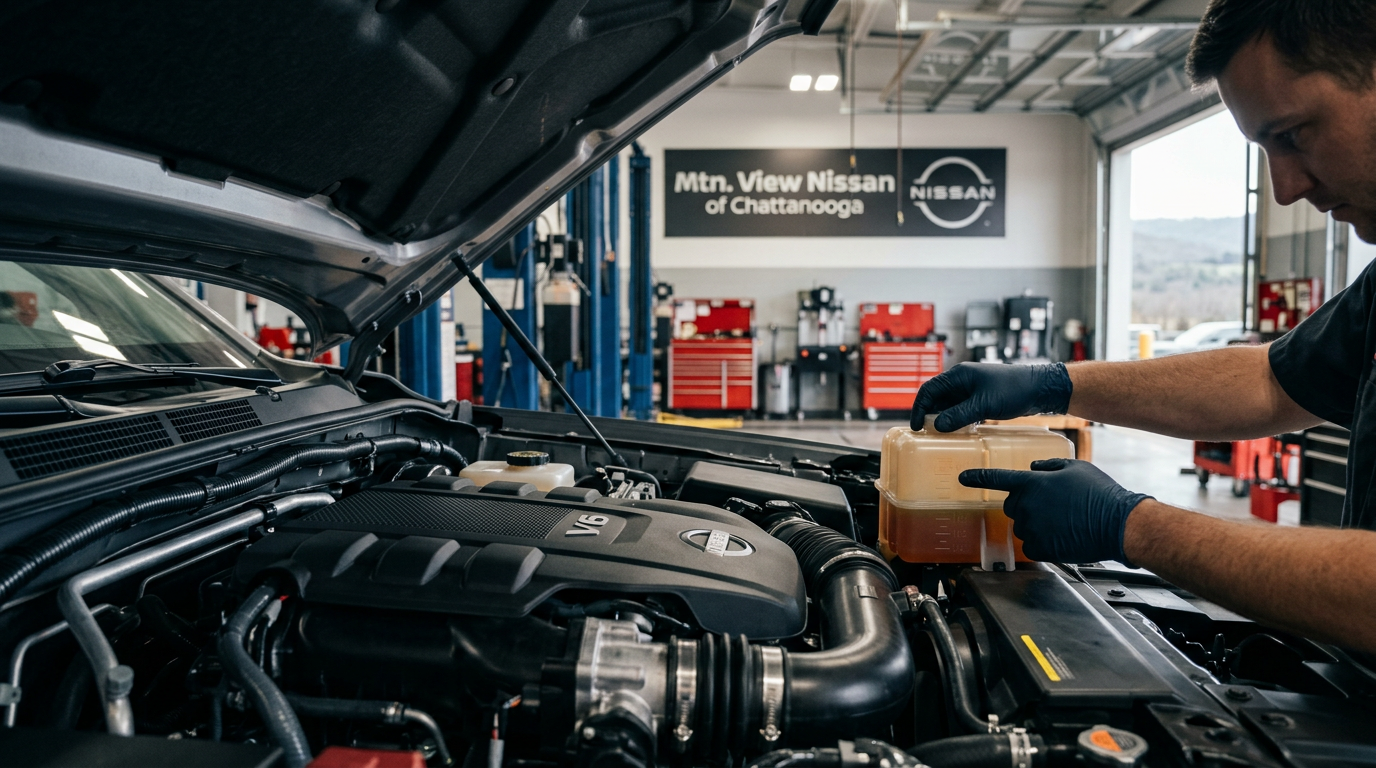
Nissan vehicles require regular fluid checks, selective top-ups, and periodic fluid exchanges across six essential vehicle systems: engine motor oil, transmission fluid, engine coolant, hydraulic brake fluid, windshield washer fluid, and drivetrain gear lubricants. Neglecting these fluids allows thermal breakdown, chemical oxidation, and mechanical friction to wear down critical internal components, resulting in costly mechanical repairs. Engine oil lubricates the engine block and removes combustion debris. Recommended oil change intervals depend on your specific powertrain. A Nissan Rogue with a variable-compression turbocharged engine permits up to 7,500 miles or one year between oil changes, whereas an Armada equipped with an endurance V8 allows up to 10,000 miles or one year under normal operating conditions. Drivers should consult the exact schedule in their model-specific owner manual rather than assuming a single standard fits every vehicle. Driving conditions around the Appalachian Ridge-and-Valley terrain in Chattanooga—especially prolonged climbs and descents near Lookout Mountain—place elevated thermal loads on engine cooling and transmission assemblies. Towing heavy recreational equipment, carrying packed passenger loads, or commuting in high summer temperatures accelerates fluid degradation. Our technicians inspect fluid levels, reservoir clarity, and seal conditions whenever your vehicle enters the service bay. If you notice fluid spots on your driveway or an unfamiliar temperature gauge reading, stop by our service center on Market Street or give our team a call at (423) 756-1500 to verify your fluid levels. Table of Contents Nissan CVT Fluid Exchange: Capacities and Safe Flushing Practices Cooling and Braking Systems: Nissan Capacities and Fluid Specifications What Is the Cost Difference Between a Dealership Flush and an Independent Shop? What Is Included in an Express Nissan Multi-Point Fluid Inspection? Common Questions About Nissan Fluid Care and System Flushes Schedule Certified Nissan Fluid Maintenance at Mtn View Nissan of Chattanooga Nissan CVT Fluid Exchange: Capacities and Safe Flushing Practices A complete transmission fluid exchange on a Nissan continuously variable transmission ( CVT) requires between 8 and 11 quarts of Nissan CVT Fluid NS-3, whereas a standard gravity drain-and-fill procedure drains only 4 to 5 quarts from the pan. High-pressure mechanical flushes are never recommended for Nissan CVT assemblies because forced external pressure dislodges settled particulate matter into delicate valve passages and risks damaging internal hydraulic seals. Nissan CVT Fluid Capacities & Replacement Methods Service Procedure Approximate Fluid Volume Gravity Pan Drain & Refill 4 to 5 quarts Cooler-Line Fluid Exchange (Low-Pressure Equipment) 8 to 11 quarts Multi-Cycle Drain, Fill & Circulation (High-Mileage) 10 to 12 quarts total High-mileage CVTs accumulate normal clutch and belt wear particles that settle in low-flow pockets and transmission pan magnets. Introducing aggressive chemical flushing solvents or high-pressure pulse equipment breaks these deposits loose, circulating them directly into the valve body and variable pulley mechanisms. The safe, factory-approved approach uses passive cooler-line fluid exchange equipment driven entirely by the vehicle's internal pump, or successive drain-and-fill cycles run at idle to dilute old lubricant without hydraulic shock. Fluid chemistry matters just as much as fluid pressure. Nissan continuously variable transmissions utilize steel drive belts or chains that grip against smooth conical pulleys under hydraulic pressure. This interface requires precise friction modifiers found exclusively in OEM formulations: Nissan CVT Fluid NS-3: Mandatory for modern models such as the Altima, Sentra, Rogue, and Murano. Nissan Matic P ATF: Engineered specifically for geared multi-speed automatic transmissions, including those in the Frontier and Pathfinder. Manual and Differential Fluids: Dedicated gear oils formulated with extreme-pressure sulfur-phosphorus additives designed for manual gearboxes and rear differentials on sports cars like the Z. Using non-approved multi-vehicle fluids alters pulley slip coefficients, degrades seals, and causes belt slippage. If you prefer handling maintenance in your own garage, you can order genuine factory fluids and filters directly through our Nissan parts department. Cooling and Braking Systems: Nissan Capacities and Fluid Specifications Modern Nissan crossovers and SUVs hold between 8.5 and 11.5 quarts of engine coolant throughout the engine block, aluminum radiator core, passenger cabin heater core, and expansion reservoir. These cooling circuits require Genuine Nissan Long Life Antifreeze/Coolant (blue), an ethylene glycol formulation utilizing advanced phosphated organic acid technology that shields aluminum engine castings from galvanic corrosion and cavitation erosion. Cooling capacities vary by powertrain configuration: Nissan Rogue: Holds approximately 9 quarts across the entire cooling circuit. Nissan Pathfinder: Requires between 10.5 and 11.5 quarts, depending on auxiliary rear climate control lines and heavy-duty radiator options. Nissan Z: Features an engine cooling circuit alongside a separate, maintenance-free intercooler coolant circuit designed specifically for its twin-turbocharger system. Nissan blue coolant delivers an extended service life, but mixing it with green conventional coolant or unapproved universal formulations causes silicate drop-out. This chemical reaction creates a gritty gel that plugs narrow heater core tubes and coats thermostat sensors. In the hydraulic braking system, fluid specification is equally strict: DOT 5 silicone fluid must never be introduced into a Nissan vehicle. Silicone fluid does not mix with glycol-based fluids, and it degrades the ethylene propylene diene monomer rubber seals used in Nissan master cylinders and brake calipers. Silicone fluid aerates when cycled through anti-lock braking system ( ABS) valves and vehicle dynamic control actuators, creating compressible micro-bubbles that produce a spongy pedal, extended stopping distances, or total hydraulic brake failure. Nissan specifies Genuine Nissan Super Heavy Duty Brake Fluid or an equivalent DOT 3 or DOT 4 glycol-based fluid to preserve pedal firmness and high boiling points under heavy braking. What Is the Cost Difference Between a Dealership Flush and an Independent Shop? A complete dealership transmission or cooling system flush generally costs between $275 and $360, while independent repair facilities across the local market typically charge between $200 and $280 for a generic fluid replacement. That price variance stems from specific differences in fluid chemistry, computerized equipment, and technician training. Independent service centers frequently use universal transmission fluids paired with aftermarket chemical additive packages to service multiple vehicle brands from a single bulk drum. While this reduces labor and material overhead, universal fluids fail to match the precise shear stability and traction characteristics mandated by Nissan CVTs. Dealership service centers use genuine OEM fluids engineered and tested by Nissan engineers. A factory-certified flush also includes electronic diagnostics. When fresh CVT fluid is added, our technicians connect factory diagnostic scan tools to read internal fluid temperatures, ensuring levels are set within the correct calibration window. The scan tool also clears and recalculates the internal transmission fluid deterioration date counter inside the transmission control module ( TCM), a step outside general repair shop workflows. Basic fluid top-ups represent minimal cost. Checking and topping off windshield washer fluid, power steering fluid, or coolant overflow reservoirs is routinely completed at no charge during scheduled maintenance or for under $15 when requested separately. You can easily reserve an appointment using our online tool to schedule a service appointment online. What Is Included in an Express Nissan Multi-Point Fluid Inspection? A Nissan multi-point fluid inspection examines level, fluid clarity, and chemical condition across all vital vehicle reservoirs, providing a complete assessment of your powertrain and safety systems. Quick-service express lanes perform these evaluations during routine visits without requiring an appointment, making it straightforward to maintain vehicles facing daily stop-and-go driving through the Southside in Chattanooga. During a standard fluid check, our technicians inspect: Engine Motor Oil: Inspected for volume, viscosity breakdown, and carbon accumulation. Transmission or CVT Fluid: Evaluated using dipstick access or overflow inspection plugs to identify oxidation, darkening, or friction material contamination. Engine Coolant: Tested with an optical refractometer to measure freeze protection and boiling point thresholds while verifying overflow reservoir levels. Hydraulic Brake Fluid: Tested for copper corrosion and atmospheric moisture absorption, which degrades boiling performance. Power Steering Fluid: Monitored on hydraulic-assist models for foaming, pump wear particles, and fluid levels. Windshield Washer Fluid: Replenished with seasonal detergent to ensure clear visibility. A simple fluid top-up corrects minor volume changes caused by evaporation or thermal contraction. A system flush completely evacuates worn, chemically exhausted fluid along with suspended contaminants, restoring clean fluid protection throughout internal hydraulic circuits. Common Questions About Nissan Fluid Care and System Flushes Q: How frequently should Nissan CVT fluid be inspected or replaced? Nissan recommends inspecting the transmission fluid level and condition every 15,000 miles or 12 months. Replacement intervals depend on driving conditions, towing demands, and electronic deterioration data recorded by the transmission control module. Many vehicles operating under severe driving conditions benefit from a complete fluid exchange every 30,000 to 60,000 miles to preserve pulley surfaces and belt life. Q: Will using non-Nissan fluids void my vehicle powertrain warranty? Using an aftermarket fluid will not void your warranty by default under federal law, provided the fluid matches Nissan performance specifications. If an unapproved fluid causes mechanical wear, valve sticking, or component failure, repairs related to that damage will not be covered by the manufacturer warranty. Using OEM fluids eliminates this risk. Q: Why does hydraulic brake fluid darken over time? Brake fluid is hygroscopic, meaning it naturally absorbs moisture from the air through microscopic pores in flexible brake hoses and reservoir vents. As moisture enters, it corrodes internal copper alloys and steel lines, turning the fluid from light amber to dark brown. Fluid with high moisture content has a lower boiling point, increasing the risk of vapor lock during sudden stops. Q: Is it normal for engine coolant levels to drop slightly between oil changes? Small drops in the expansion tank can occur over months due to normal thermal expansion and atmospheric venting. Noticeable fluid drops, sweet odors inside the passenger cabin, or white exhaust smoke indicate an active leak in the radiator core, hose clamps, water pump gasket, or heater core that requires immediate inspection. Q: What immediate action should I take if a fluid temperature warning illuminates? Safely pull off the roadway, shift into park, and let the engine idle to allow the cooling fans to draw heat away from the radiator, unless steam is visible. Never open a hot radiator cap, as pressurized boiling coolant can cause severe burns. If mechanical trouble leaves you stranded, contact Nissan Roadside Assistance: 1-800-225-2476 for emergency towing to the nearest authorized service center. Schedule Certified Nissan Fluid Maintenance at Mtn View Nissan of Chattanooga Maintaining clean, factory-approved fluids protects your vehicle against excessive wear, preserves mechanical efficiency, and ensures long-term driving safety. When your vehicle requires an express fluid top-up, a comprehensive multi-point inspection, or a transmission fluid exchange, our factory-trained service technicians deliver precision care using genuine OEM fluids and approved diagnostic equipment. Take the next step in protecting your investment by scheduling your service visit online, contacting our service advisors directly at (423) 756-1500, or dropping in to our service center at 2100 Market St, Chattanooga, TN 37408 today. © 2026 Mtn View Nissan of Chattanooga. All rights reserved.
What Does the Standard Nissan Factory Warranty Cover

What Does the Standard Nissan Factory Warranty Cover?

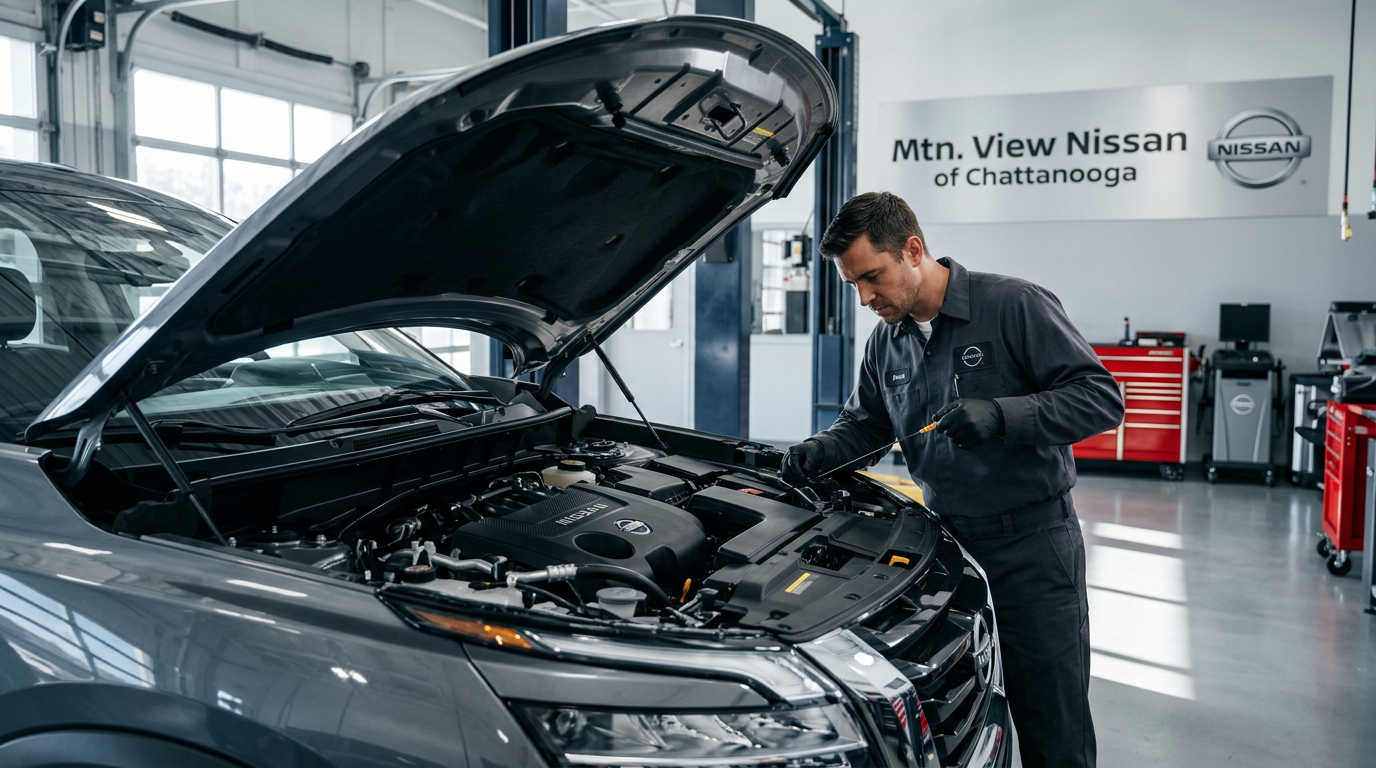
The standard Nissan factory warranty includes a 3-year/36,000-mile basic limited warranty and a 5-year/60,000-mile limited powertrain warranty, whichever comes first. Basic coverage protects against defects in factory-installed materials or workmanship, while powertrain coverage safeguards the engine, transmission, transaxle, transfer case, and drive axle assemblies. Nissan also provides a 5-year/unlimited-mileage corrosion perforation warranty covering body sheet metal rust-through. Understanding the scope of your factory coverage helps keep your vehicle operating smoothly through everyday driving across the Appalachian ridges and steep climbs around Lookout Mountain. The 3-year/36,000-mile basic limited warranty acts as bumper-to-bumper protection. It covers virtually every original factory component—from electronic display screens and HVAC blower motors to power window actuators and safety sensor modules—against manufacturing defects. If a factory-installed component fails prematurely due to material or assembly flaws, repairs are completed using new or remanufactured OEM parts at zero cost to the owner. The 5-year/60,000-mile limited powertrain warranty focuses strictly on the major mechanical systems that generate and transfer power to the wheels. Inside gas-powered engines, this encompasses internal lubricated components such as pistons, crankshafts, camshafts, timing chains, oil pumps, cylinder heads, and the water pump. For vehicles equipped with Continuously Variable Transmissions (Xtronic CVT®) or traditional automatic gearboxes, coverage protects torque converters, internal clutches, control valves, and transmission control units. Factory warranty coverage excludes routine maintenance items that experience standard operational friction and wear. Engine oil filters, air filters, windshield wiper blades, key fob batteries, and brake pads are regular maintenance items and are not covered under standard warranty repair unless their premature failure stems directly from a covered mechanical defect. Wheel alignment and tire balancing are similarly limited after initial mileage thresholds. Federal and state emissions warranties provide additional coverage layers. Federal regulations require emission control components—such as catalytic converters, engine control modules, and onboard diagnostic devices—to carry dedicated extended terms beyond the basic warranty. To confirm coverage details or verify whether a specific symptom qualifies for factory-backed repair, drivers can visit our service center location at 2100 Market St or get immediate guidance by calling our team at (423) 756-1500. Table of Contents Does the Standard Nissan Warranty Include Roadside Assistance? Does EV Thermal Management Failure Qualify for Nissan Warranty Repair? How Do Nissan Factory Warranty Terms Compare to Toyota? Where Can Drivers Get Authorized Nissan Warranty Repairs in Chattanooga? Common Questions About Nissan Warranty Service Schedule Your Authorized Nissan Warranty Service Today Does the Standard Nissan Warranty Include Roadside Assistance? Standard Nissan factory warranty protection includes complimentary 24-hour roadside assistance coverage for 3 years or 36,000 miles, whichever limit is reached first. Emergency services are available 365 days a year across North America, providing immediate dispatch for mechanical breakdowns, towing, flat tire changes, battery jump-starts, fuel delivery, and lockout assistance. When unexpected road trouble occurs, Nissan Roadside Assistance serves as your exclusive manufacturer-backed emergency support system. Drivers in need of immediate assistance can reach official operators directly by calling Nissan Roadside Assistance at 1-800-225-2476. Having your Vehicle Identification Number (VIN) and current location ready when calling ensures faster dispatching to your vehicle. Owners of equipped vehicles can also initiate emergency support directly from the cabin display using NissanConnect® voice commands. Unlike generic third-party motor clubs, factory roadside coverage prioritizes long-term vehicle health by towing your vehicle straight to an authorized Nissan dealership. This guarantees that repairs are evaluated by factory-trained technicians using specialized diagnostic tools and genuine OEM parts. Key benefits of official roadside assistance include: Emergency Towing Service: Transports your vehicle directly to the nearest authorized Nissan dealer following a mechanical failure or road incident. Flat Tire Changes: Dispatches a service vehicle to install your operational spare tire on-site. Battery Jump-Starts: Provides immediate battery-boosted starts to get your vehicle running again. Emergency Lockout Service: Offers prompt assistance if key fobs are locked inside the cabin. Fuel Delivery: Delivers emergency fuel supplies directly to stranded drivers. Trip Interruption Benefits: Covers emergency lodging, meals, and substitute transportation if a warranty-covered breakdown occurs more than 100 miles from home. Because roadside assistance relies on authorized dealer support, repairs performed through factory dispatch preserve your underlying warranty protection. Our service team coordinates directly with tow operators to receive arriving vehicles and begin diagnostic work without delay. Does EV Thermal Management Failure Qualify for Nissan Warranty Repair? Thermal management system failures qualify for complete warranty repair under Nissan electric vehicle factory guidelines. Key thermal components—including electric coolant pumps, heat exchangers, battery cooling loops, thermal control valves, and system pressure sensors—are fully covered against manufacturing defects and operational failures. Electric vehicle battery packs depend on precise liquid thermal regulation to maintain optimal operating temperatures during rapid charging and heavy acceleration. If an electric cooling pump fails or a thermal control valve sticks, the vehicle's onboard management computer triggers diagnostic trouble codes (DTCs) and may limit power output to protect the high-voltage battery modules. Because thermal control systems are essential to high-voltage component health, repairs are covered under dedicated electric vehicle system warranty terms. When EV drivers visit our facility with cooling indicators or range warnings, our technicians run specialized Nissan diagnostic protocols on thermal loops before performing any warranty service. Diagnostic tests evaluate coolant flow rates, pressure integrity across heating circuits, and thermal sensor calibration data. If a thermal component requires replacement, technicians refill the cooling system with factory-specified non-conductive dielectric fluid and purge air pockets using computerized diagnostic tools. Coverage for EV thermal systems spans both basic limited warranty periods and dedicated EV component terms. In addition to thermal system coverage, electric drive motors, power inverter modules, and onboard charger assemblies carry explicit factory warranty backing. To keep electric heating and cooling systems operating properly, drivers can easily maintain their maintenance schedule by scheduling a service appointment online. How Do Nissan Factory Warranty Terms Compare to Toyota? Toyota offers a similar warranty structure to Nissan, with a 3-year/36,000-mile basic warranty and a 5-year/60,000-mile powertrain warranty. Both manufacturers also provide a 5-year/unlimited-mileage corrosion perforation warranty. While baseline coverage terms are numerically identical, the comprehensive ownership value differs in component depth and extended protection offerings. Toyota includes two years or 25,000 miles of basic scheduled maintenance, whereas Nissan focuses coverage strength on comprehensive component protection plans and specialized electric vehicle systems. Coverage Category Nissan Standard Factory Warranty Toyota Standard Factory Warranty Basic Limited Warranty 3 Years / 36,000 Miles 3 Years / 36,000 Miles Powertrain Warranty 5 Years / 60,000 Miles 5 Years / 60,000 Miles Corrosion Perforation 5 Years / Unlimited Miles 5 Years / Unlimited Miles Roadside Assistance 3 Years / 36,000 Miles 2 Years / Unlimited Miles Extended Protection Plans Security+Plus (Up to 2,000+ parts) Toyota Extra Care Nissan backing extends beyond initial factory coverage through optional Security+Plus vehicle service contracts. Security+Plus plans extend coverage options up to 8 years or 120,000 miles, adding protection for over 2,000 individual mechanical and electronic components. These extended programs include rental car reimbursement, extended trip interruption coverage, and full tire road hazard protection. For electric vehicles, Nissan warranty terms deliver long-term support for high-voltage battery capacity retention alongside core drive electronics. This specialized coverage protects against unexpected capacity loss beyond normal degradation parameters, providing high-voltage confidence for EV owners. Where Can Drivers Get Authorized Nissan Warranty Repairs in Chattanooga? Authorized Nissan warranty repairs in Chattanooga must be completed at a certified dealership service center to ensure factory coverage remains valid. Independent repair shops and generic service facilities cannot submit claims to Nissan North America or perform zero-cost factory warranty replacements. AUTHORIZED WARRANTY SERVICE ADVANTAGE Certified Nissan Dealership Independent Repair Shops • Zero out-of-pocket warranty • Full customer out-of-pocket reimbursement expense • Factory-trained technicians • Generic multi-brand mechanics • Genuine OEM replacement parts • Aftermarket or generic parts • Direct factory software tools • Limited diagnostic access Our service center provides the technical equipment, specialized software, and master-certified technicians required for complex warranty diagnostics. Whether you commute daily along the Tennessee River waterfront or drive through surrounding valley routes, our facility processes all administrative paperwork directly through the manufacturer. This eliminates out-of-pocket costs for covered mechanical breakdowns. Using an authorized dealership ensures that every replacement component installed on your vehicle is a genuine OEM part. Genuine parts match the exact engineering specifications, metal alloys, and software calibrations of your vehicle's original factory equipment. Installing unapproved aftermarket components can lead to system incompatibilities that risk voiding portions of your remaining factory coverage. When minor maintenance items or out-of-warranty accessories are needed, drivers can order genuine factory components through our online parts department. Our certified service team verifies VIN compatibility for every component, ensuring your vehicle maintains its original performance and factory protection standards. Common Questions About Nissan Warranty Service Q: Do I need to schedule an appointment for Nissan warranty repairs? Advance scheduling is required for dedicated warranty repairs and complex diagnostic evaluations. While quick routine items like oil changes utilize Express Service lines, diagnostic work requires reserved bay time and specialized master technician scheduling. Booking your appointment in advance gives technicians the time needed to hook up diagnostic equipment, verify warranty coverage eligibility with the manufacturer, and secure required OEM replacement parts before you arrive. Q: Is the original Nissan factory limited warranty transferable to a second owner? The remaining balance of Nissan’s 3-year/36,000-mile basic warranty and 5-year/60,000-mile powertrain warranty automatically transfers to subsequent private buyers at no cost. Factory warranty protection attaches directly to the Vehicle Identification Number (VIN) rather than the original purchaser. Subsequent owners do not need to pay transfer fees or submit formal paperwork to maintain coverage for the remainder of the active time and mileage limits. Q: What documentation should I bring when bringing my vehicle in for warranty service? You should bring your vehicle registration, current mileage info, and any historical maintenance records if the repair involves a regularly serviced assembly like the engine or transmission. Presenting clear service documentation proves that recommended maintenance intervals were followed, satisfying factory guidelines and preventing claim approval delays. Q: Are loaner vehicles or shuttle services available during extended warranty repairs? Dealerships offer local shuttle transportation and complimentary service loaner vehicles for eligible multi-hour or overnight warranty repairs, subject to availability. Confirming loaner availability when scheduling your repair ensures uninterrupted transportation while your vehicle is in the shop. Q: Can aftermarket accessories or modifications void my Nissan factory warranty? Aftermarket parts or custom modifications do not automatically void your entire factory warranty, but damage caused directly by unapproved equipment is excluded from coverage. Under federal Magnuson-Moss Warranty Act standards, the manufacturer must prove an aftermarket component directly caused a mechanical failure to decline a specific claim. Standard factory components unaffected by modifications remain fully covered. Schedule Your Authorized Nissan Warranty Service Today Protecting your vehicle with authorized factory warranty service ensures long-term reliability and preserves your manufacturer coverage. Our factory-trained technicians handle every aspect of warranty care—from initial computer diagnostics to direct claim submission with Nissan North America. When you notice warning lights, unusual mechanical noises, or cooling system indicators, addressing them promptly prevents minor issues from developing into major component failures. Our state-of-the-art service facility at 2100 Market St serves drivers across Chattanooga with specialized repair bays, computerized diagnostic software, and dedicated OEM parts inventory. Setting up your service visit takes only a moment. You can get directions to our Chattanooga service center for your appointment or reserve your spot today by giving our team a call at (423) 756-1500. © 2026 Mtn View Nissan of Chattanooga. All rights reserved.
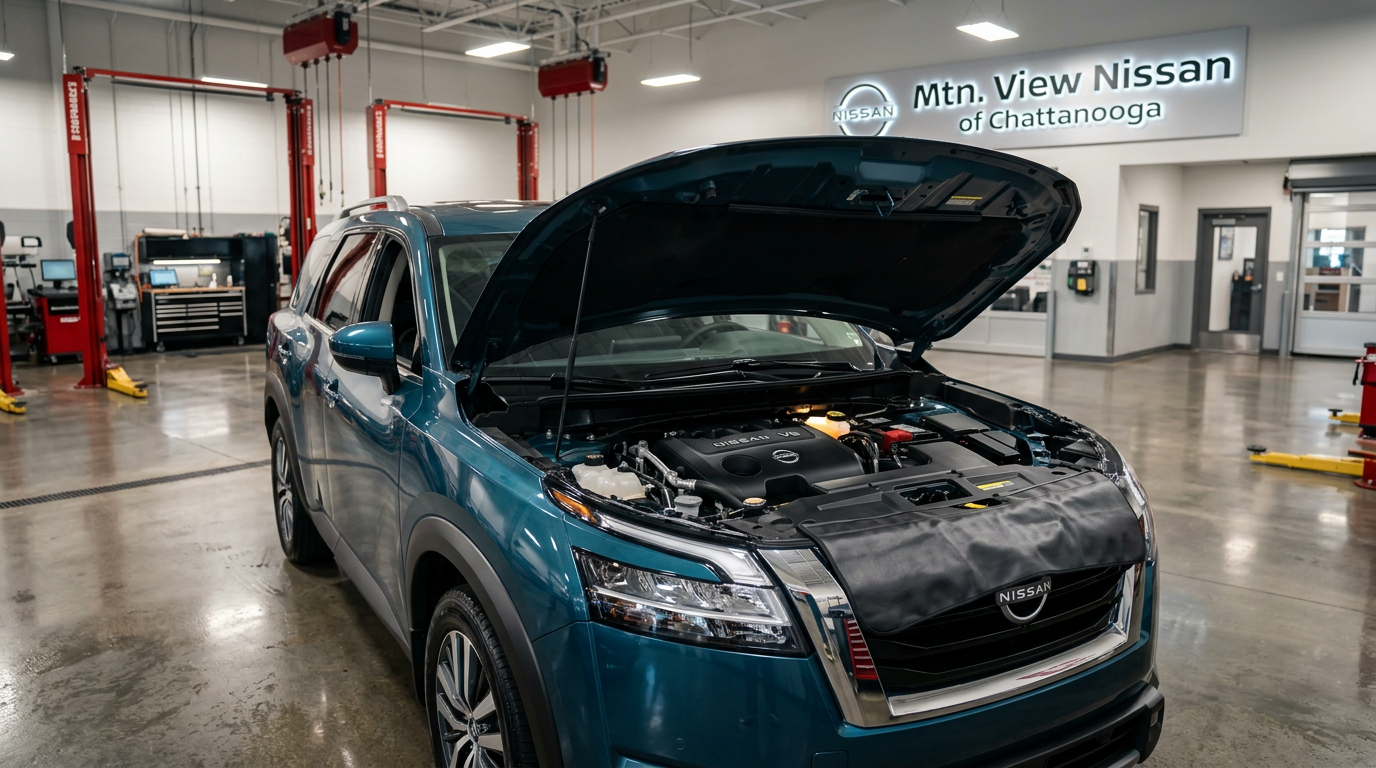
How Often Does a Nissan Sentra Need Brake Service

How Often Does a Nissan Sentra Need Brake Service?

A Nissan Sentra requires a professional brake inspection every 5,000 to 7,500 miles—typically aligned with routine oil changes—while brake pad replacement is generally necessary every 30,000 to 70,000 miles. Exact replacement intervals vary based on individual driving habits, traffic density, and friction material type. Daily stop-and-go commuting along the Tennessee River valley around Chattanooga accelerates pad and rotor wear compared to open highway driving. Keeping up with scheduled brake inspections prevents minor friction wear from developing into costly rotor damage or compromised hydraulic performance. During a standard service visit, factory-trained technicians measure remaining friction pad thickness in millimeters, examine the physical condition of front and rear rotors, inspect hydraulic lines for moisture contamination, and check brake fluid levels. Driving conditions significantly dictate friction component longevity. Aggressive braking, carrying heavy cargo loads, or frequent hill descents near Lookout Mountain increase operating temperatures within the braking assembly. High heat accelerates pad degradation and can lead to thermal glazing on the rotor surface. Conversely, steady highway driving puts minimal strain on the system, pushing replacement needs closer to the upper end of the mileage spectrum. When routine maintenance indicates that friction components are nearing minimum safety thresholds, choosing timely service ensures maximum stopping power and preserves related suspension and drivetrain components. Vehicle owners can easily visit our service center on Market Street or give our team a quick call at (423) 756-1500 to consult with an advisor regarding recommended maintenance schedules. Table of Contents What Type of Brake System Does the Nissan Sentra Use? What Are the Key Signs That Your Nissan Sentra Needs Brake Service? How Much Does Nissan Sentra Brake Pad Replacement Cost? Does Installing Aftermarket Brake Parts Void Your Nissan Warranty? Common Questions About Nissan Sentra Brake Maintenance Certified Nissan Sentra Brake Maintenance in Chattanooga What Type of Brake System Does the Nissan Sentra Use? Modern Nissan Sentra models utilize a four-wheel disc brake system equipped with an Anti-lock Braking System, Electronic Brake-force Distribution, Brake Assist, and an Electric Parking Brake with Hill Hold Control. Recent model years feature 11-inch vented front disc rotors and 10.2-inch solid rear disc rotors, replacing older rear drum configurations to deliver enhanced heat dissipation and balanced stopping performance across all four wheels. The hydraulic architecture works in unison with electronic driver-assist safety suites. The standard 2.0-liter four-cylinder engine, delivering 149 horsepower and 146 lb-ft of torque through an Xtronic continuously variable transmission, relies on precise hydraulic pressure management to maintain directional vehicle stability under heavy deceleration. Key mechanical and electronic components within this network include: Vented Front Rotors: Internal cooling vanes pump air through the rotor as it spins, rapidly shedding heat generated during hard braking stops. Solid Rear Rotors: Provide consistent clamping pressure to equalize braking bias, working alongside electronic proportioning controls. Anti-lock Braking System (ABS): Monitors individual wheel speeds via magnetic sensors, modulating hydraulic pressure rapidly during sudden stops to prevent wheel lockup and preserve steering control. Electronic Brake-force Distribution (EBD): Dynamically shifts braking pressure between front and rear axles based on current vehicle weight distribution and passenger load. Brake Assist: Detects panic-braking behavior by measuring the speed of brake pedal depression, automatically applying maximum hydraulic boost before the driver depresses the pedal fully. This integrated electronic and mechanical hardware ensures consistent pedal response and shortened stopping distances under varied road and weather conditions. What Are the Key Signs That Your Nissan Sentra Needs Brake Service? Squealing or grinding noises, a soft or spongy brake pedal, steering wheel vibration during deceleration, and extended stopping distances are the primary indicators that a Nissan Sentra requires immediate brake inspection. Modern friction pads incorporate mechanical wear sensors that emit a continuous high-pitched metallic chirp when pad material wears down to approximately 2 millimeters. Recognizing these diagnostic warning signs early prevents severe damage to surrounding wheel-end assemblies: High-Pitched Squealing: Triggered by a built-in metal indicator clip contacting the spinning rotor, signaling that pad material is depleted and replacement is overdue. Harsh Metallic Grinding: Occurs when friction material is entirely worn away, causing the steel backing plate to clamp directly against the rotor surface, causing deep scoring and requiring complete rotor replacement. Pedal Pulsation or Steering Vibration: Indicates lateral runout or uneven thickness variation across the rotor surface, often caused by severe thermal warping. Spongy or Low Brake Pedal: Points to air trapped within hydraulic lines, severe brake fluid degradation, or internal master cylinder bypass leaks. Vehicle Pulling to One Side: Suggests a sticking caliper slide pin, uneven pad wear, or a restricted hydraulic brake hose. Addressing these symptoms promptly restores factory stopping performance and safeguards against unexpected system failure. Vehicle owners noticing any of these warning signs can easily schedule a multi-point brake inspection online to have our certified technicians evaluate the friction system. How Much Does Nissan Sentra Brake Pad Replacement Cost? Replacing brake pads on a 2027 Nissan Sentra in Chattanooga generally costs between $150 and $300 per axle for parts and labor, depending on whether ceramic or semi-metallic friction materials are selected and whether the rotors require machining or total replacement. When rotor replacement is needed alongside pad installation, full axle service typically ranges higher due to additional component costs and precise fitment labor. Total repair costs are influenced by mechanical condition, parts specification, and labor requirements across several key areas: Friction Material Selection: Ceramic brake pads generally carry a slightly higher parts cost than semi-metallic alternatives, but they produce significantly less dark brake dust and offer quieter operation for daily city driving. Rotor Resurfacing vs. Replacement: If rotors retain sufficient disc thickness above minimum discard specifications, resurfacing on a precision lathe restores a smooth finish at a lower cost than installing new rotor core castings. Caliper and Hardware Servicing: Replacing worn guide pin boots, stainless steel abutment clips, and applying high-temperature synthetic lubricant ensures smooth caliper sliding and prevents premature pad taper. Diagnostic Precision: Professional technicians conduct digital caliper measurements across multiple rotor points to determine whether resurfacing remains a safe, viable option. Commuters navigating dense local traffic often ask our service advisors whether factory ceramic pads or alternative formulations offer longer service life under frequent stop-and-go driving. Genuine Nissan parts match original factory specifications for friction coefficient, thermal resilience, and noise damping. Drivers interested in maintaining factory build standards can order genuine Nissan brake pads directly through our specialized parts center. Does Installing Aftermarket Brake Parts Void Your Nissan Warranty? Installing aftermarket brake components does not void a Nissan factory warranty under federal protection established by the Magnuson-Moss Warranty Act. Vehicle manufacturers cannot deny warranty coverage simply because non-OEM or third-party replacement parts were installed, provided those parts function correctly and meet basic operational standards. However, warranty protection becomes nuanced if an aftermarket component fails or causes direct damage to adjacent factory systems. Key warranty considerations include: Causal Connection Requirement: A dealership or manufacturer must legally prove that an aftermarket part directly caused damage to a covered assembly before denying a specific warranty claim. System-Specific Limitations: If an improper aftermarket brake pad or caliper causes damage to an ABS wheel speed sensor or wheel hub assembly, repairs for those affected components will not be covered under factory warranty. Maintenance Record Keeping: Retaining detailed invoices and service records showing regular maintenance intervals prevents disputes regarding neglect if a warranty claim arises. Factory Engineering Standards: Genuine Nissan parts are backed by a dedicated 12-month/12,000-mile limited warranty and are engineered specifically to match factory ABS and brake assist calibration. Choosing original equipment components ensures guaranteed fitment, preserves factory safety calibrations, and maintains full comprehensive warranty integrity without operational compromise. Common Questions About Nissan Sentra Brake Maintenance Q: How long do factory Nissan Sentra brake rotors typically last? Factory brake rotors on a Nissan Sentra usually last between 50,000 and 70,000 miles under normal driving conditions. Rotor lifespan depends heavily on driving style, ambient moisture exposure, and whether brake pads are replaced before wearing down to their steel backing plates. Routine inspection during every oil change helps identify minor scoring or uneven thickness variation before severe vibration develops. Q: What causes the brake pedal in a Nissan Sentra to feel soft or spongy? A spongy brake pedal feel is primarily caused by air moisture contamination in the hydraulic lines, deteriorated brake fluid, or internal seal leakage within the master cylinder. Moisture lowers the boiling point of hydraulic fluid, generating compressible vapor bubbles under high thermal stress. Nissan recommends flushing and replacing brake fluid every 20,000 to 30,000 miles to maintain firm pedal resistance. Q: Are visual brake inspections included with routine oil changes? Multi-point inspections performed during scheduled oil changes at authorized service centers typically include a comprehensive visual check of brake pads, rotors, caliper slide movement, and fluid reservoirs. Technicians measure outer pad thickness and inspect rotor surfaces for rust ridge accumulation or deep scoring, providing a clear report on remaining component life. Q: What is the benefit of ceramic brake pads over semi-metallic options for a sedan? Ceramic brake pads feature a dense compound of ceramic fibers and non-ferrous filler materials that generate light-colored, non-abrasive dust that does not easily bond to alloy wheels. They operate with significantly less noise across normal operating temperatures and extend rotor surface life during daily city commuting compared to harder, metallic formulations. Q: How does Automatic Emergency Braking affect routine brake component wear? The Intelligent Forward Collision Warning with Automatic Emergency Braking system uses front radar sensors to detect potential hazards, applying swift hydraulic force to prevent collisions. While routine driver-initiated stopping accounts for over 99% of total pad wear, emergency automated stops apply rapid, full clamping force, making routine hardware inspections essential to ensure maximum system readiness. Certified Nissan Sentra Brake Maintenance in Chattanooga Maintaining your vehicle's stopping system with factory-certified components ensures long-term driving safety, original pedal feel, and proper integration with advanced driver-assist safety technologies. Our factory-trained technical staff utilizes specialized diagnostic tools, precision rotor measuring equipment, and genuine Nissan friction materials designed explicitly for your sedan. Whether your vehicle requires a basic fluid check, friction pad replacement, or complete rotor machining, professional care preserves operational integrity and long-term resale value. Drivers can stop by our dealership located at 2100 Market St, Chattanooga, TN 37408, or use our digital portal to get directions to our facility. For immediate assistance or to speak directly with a factory-trained service specialist, feel free to contact our team at (423) 756-1500 to schedule your next maintenance appointment. © 2026 Mtn View Nissan of Chattanooga. All rights reserved.
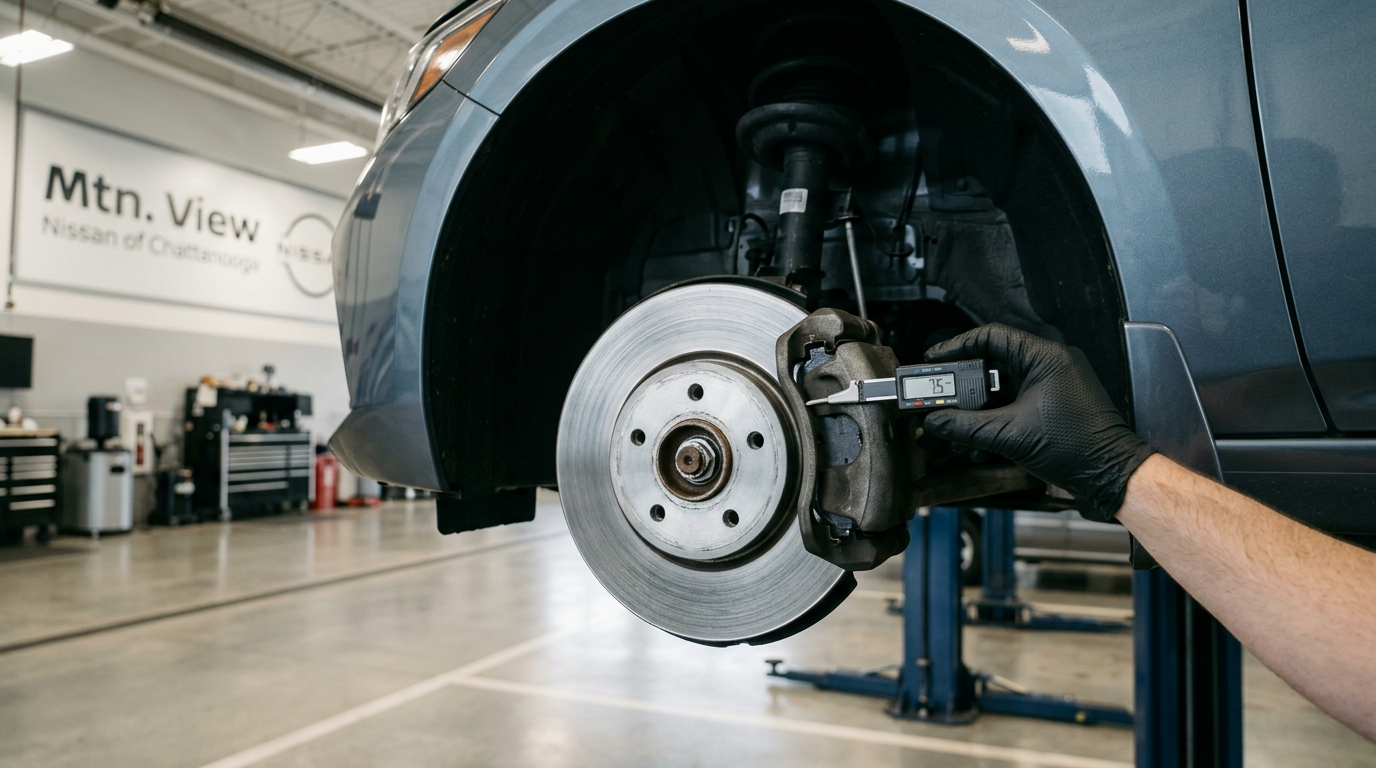
What Are the Oil Service Requirements for a Nissan Frontier

What Are the Oil Service Requirements for a Nissan Frontier?

Under normal driving conditions, the Nissan Frontier equipped with the 3.8L V6 engine requires an oil and filter change every 7,500 miles or 12 months, using 0W-20 full synthetic motor oil meeting ILSAC GF-6A standards with a total engine oil capacity of 5.4 quarts. Drivers operating under severe conditions—including frequent trailering, off-roading, or short-distance urban commuting—must follow a shortened interval of 3,750 miles or 6 months to maintain internal engine cleanliness and protect thermal efficiency. Proper lubrication is the foundation of long-term mechanical reliability for midsize pickup trucks. The direct-injected 3.8L V6 engine operates under high internal pressures and tight mechanical clearances. Fresh synthetic oil flows through internal galleys to lubricate the overhead camshafts, timing chain assemblies, and cylinder walls while absorbing heat generated during heavy acceleration and towing. Following factory-specified service schedules ensures that protective additives remain active, preventing harmful varnish buildup and keeping engine components operating within target temperature ranges. At Mtn View Nissan of Chattanooga, our factory-trained service technicians deliver certified maintenance tailored specifically to your truck's engineering requirements. When you bring your vehicle to our Chattanooga service center, our team uses original equipment manufacturer parts and precision bulk filling systems calibrated for exact fluid volumes. Whether your truck serves as a daily work vehicle or a weekend adventure rig, maintaining correct oil health keeps your engine performing at its peak. You can schedule a service appointment online or give our service department a call at (423) 756-1500 to establish a consistent maintenance routine. Table of Contents What Is the Recommended Oil Change Interval and Capacity for the 3.8L V6? What Counts as Severe Driving Conditions for a Nissan Frontier? What Happens If You Delay an Oil Change on Your Pickup? How Much Does a Dealership Oil Change Cost in Chattanooga? How Do You Reset the Maintenance Light and Inspect Standard Engine Features? Frequently Asked Questions About Nissan Frontier Maintenance Schedule Certified Nissan Service at Mtn View Nissan What Is the Recommended Oil Change Interval and Capacity for the 3.8L V6? The recommended oil change interval for a 2026 Nissan Frontier in Chattanooga, powered by the 3.8L V6 engine, is 7,500 miles or 12 months under standard operating conditions, with a precise oil refill capacity of 5.4 quarts when replacing the oil filter. Nissan engineers explicitly specify 0W-20 full synthetic motor oil that satisfies ILSAC GF-6A quality standards for this engine platform. Full synthetic formulations provide superior resistance to viscosity breakdown compared to conventional or synthetic-blend oils. At cold startup, 0W-20 oil flows rapidly to upper engine components, minimizing initial metal-on-metal friction before the engine reaches full operating temperature. Under heavy load, the synthetic base stock resists thermal oxidation, maintaining a stable protective film across bearing surfaces even during sustained highway driving or hill climbs. Pairing high-grade synthetic oil with a genuine OEM oil filter is equally critical. Factory Nissan oil filters feature synthetic filter media engineered to capture microscopic contaminants without restricting oil pressure. They also incorporate an internal anti-drainback valve that holds oil within the filter housing when the engine is turned off. This prevents dry startups by ensuring instant oil pressure delivery the moment the ignition is engaged. Owners who prefer to perform their own fluid checks or source factory-approved components can consult our genuine OEM Nissan parts department to obtain exact-fit filters, crush washers, and approved lubricants. What Counts as Severe Driving Conditions for a Nissan Frontier? Severe driving conditions for a Nissan Frontier include regular trailer towing, hauling heavy bed payloads, driving on dusty or unpaved mountain roads, making frequent short trips under 5 miles in cool weather, and idling extensively in traffic. When a truck routinely encounters these operation demands, Nissan guidelines recommend reducing the oil service interval to 3,750 miles or 6 months. Operating a midsize pickup in diverse geographical environments directly impacts oil longevity. The Appalachian Ridge-and-Valley region surrounding Chattanooga presents distinct driving challenges, from steep grade climbs up Lookout Mountain to frequent stop-and-go traffic along river valley corridors. Towing a boat or camper places sustained high thermal loads on the engine, accelerating the rate at which engine oil oxidizes and breaks down. Similarly, driving along unpaved gravel routes or dirt access trails introduces fine airborne dust that can contaminate crankcase air if intake systems and filters are stressed. Short-trip driving is another common severe condition that many truck owners overlook. When trips last less than 5 miles, the engine oil rarely reaches its full operating temperature of roughly 200 degrees Fahrenheit. As a result, moisture from combustion bypass and unburned fuel vapor accumulate inside the oil pan rather than evaporating off. Over time, this moisture reacts with oil additives to form acidic sludge, which degrades corrosion protection. When truck owners stop in to ask about maintenance schedules after heavy weekend trailering, our technicians walk them through these environmental factors to help choose the safest maintenance interval for their driving habits. What Happens If You Delay an Oil Change on Your Pickup? Delaying an oil change on a Nissan Frontier causes motor oil to break down chemically, resulting in sludge formation, elevated engine friction, accelerated component wear, decreased fuel economy, and potential voiding of your 5-year/60,000-mile powertrain warranty. As motor oil ages beyond its intended service life, heat and mechanical shear forces break down the long-chain polymer molecules that give synthetic oil its protective viscosity characteristics. Detergent and dispersant additives become depleted, allowing soot, carbon deposits, and metallic wear particles to clump together. This sticky sludge coats internal surfaces, clogging delicate oil passages and restricting oil flow to critical high-friction areas such as variable valve timing actuators and hydraulic lifters. Over time, oil starvation leads to permanent mechanical damage. Excessive friction accelerates wear on piston rings, cylinder walls, and timing chain guides, which can cause abnormal engine noise and oil consumption. Furthermore, the direct-injected 3.8L V6 engine relies on clean, high-pressure oil flow to maintain peak efficiency. In independent owner studies such as J.D. Power vehicle dependability surveys, the Nissan Frontier consistently earns reliability scores in the low- to mid-80s out of 100, reflecting its robust design. However, preserving that long-term durability requires adhering to routine fluid service so internal components remain properly lubricated and protected against heat wear. How Much Does a Dealership Oil Change Cost in Chattanooga? A factory-authorized dealership oil change for a 2026 Nissan Frontier in Chattanooga generally costs between $80 and $120 for full synthetic oil and a genuine OEM filter. Investing in certified dealer service offers substantial value beyond the raw cost of oil and a filter. Every Frontier oil change at our service center includes a complete multi-point inspection performed by factory-trained technicians who specialize exclusively in Nissan vehicles. Technicians inspect brake pad thickness, suspension bushings, drive belts, air filtration systems, battery health, and tire tread depth. Identifying minor wear items early prevents costly roadside breakdowns and keeps your truck operating safely across varied weather conditions. Choosing authorized dealership service also ensures accurate fluid management and precise record-keeping. Our technicians utilize bulk dispensing equipment to deliver the exact 5.4 quarts of 0W-20 full synthetic motor oil required for the direct-injected V6, preventing overfilling or underfilling issues common at quick-lube outlets. Furthermore, all service records are automatically logged into Nissan's centralized vehicle history database, providing clear documentation of completed maintenance that protects your factory warranty coverage and enhances resale value when trading in your truck down the road. How Do You Reset the Maintenance Light and Inspect Standard Engine Features? To reset the oil change maintenance light on a 2026 Frontier in Chattanooga, navigate through the Advanced Drive-Assist Display in the instrument cluster using the left-hand steering wheel controls, select the Settings menu, scroll down to Maintenance, choose Service, and press and hold the OK button until the mileage counter resets to zero. Resetting the maintenance reminder should always follow a physical oil and filter change to ensure the digital tracking matches actual fluid condition. While performing routine service, taking time to visually inspect under-hood components helps catch potential issues early. Key areas to check include: Dipstick Oil Level: Pull the engine oil dipstick, wipe it clean, reinsert it fully, and pull it out again to verify the oil level rests between the upper and lower operating marks. Engine Air Filter: Unclip the air cleaner housing to inspect the intake filter element for accumulated dust, leaves, or road debris that could restrict airflow to the V6 engine. Fluid Levels: Check coolant, brake fluid, and windshield washer reservoirs to verify levels meet marked cold fill lines. Serpentine Drive Belt: Inspect the accessory drive belt for surface cracking, fraying, or uneven edge wear. The standard direct-injected 3.8L V6 engine produces 310 hp and 281 lb-ft of torque, backed by a responsive 9-speed automatic transmission. Maintaining proper fluid levels and clean air filters preserves this powertrain's responsive throttle delivery, allowing trucks configured for towing to confidently handle loads up to 6,680 lbs (or up to 7,150 pounds when properly equipped) without overheating or losing efficiency. Frequently Asked Questions About Nissan Frontier Maintenance Q: What type of motor oil does a 3.8L V6 Nissan Frontier require? The Nissan Frontier with a 3.8L V6 engine requires 0W-20 full synthetic motor oil certified to meet ILSAC GF-6A specifications. Synthetic oil provides rapid cold-weather flow to critical engine components during startup while resisting high-temperature viscosity breakdown during heavy hauling or hot summer driving. Q: How many quarts of oil are needed for a Frontier oil change? A standard engine oil and filter change on a 3.8L V6 Nissan Frontier requires approximately 5.4 quarts of motor oil. Technicians always verify final fluid height using the engine dipstick after running the engine briefly to fill the new oil filter housing. Q: Can I drive 10,000 miles between oil changes in a Nissan Frontier? Driving 10,000 miles between oil changes is not recommended for a Nissan Frontier. Nissan factory specifications mandate a maximum interval of 7,500 miles or 12 months under normal driving conditions, and 3,750 miles or 6 months under severe driving conditions, to prevent oil sludge and maintain warranty protection. Q: What is included in a factory Nissan Express Service oil change? A factory Nissan Express Service oil change includes draining old oil, installing 5.4 quarts of 0W-20 full synthetic motor oil, replacing the engine oil filter with an original equipment filter, resetting the maintenance indicator light, and completing a comprehensive multi-point vehicle inspection. Q: Does frequent towing lower the oil change interval on a Nissan Frontier? Yes, frequent trailer towing or hauling heavy cargo falls under severe driving conditions. The extra strain elevates engine temperatures and accelerates lubricant degradation, requiring oil and filter replacements every 3,750 miles or 6 months to protect internal engine components. Schedule Certified Nissan Service at Mtn View Nissan Keeping up with routine oil changes is the single most effective action you can take to preserve the power, performance, and long-term value of your Nissan Frontier. Our team at Mtn View Nissan of Chattanooga is dedicated to delivering efficient, factory-certified vehicle care using genuine Nissan parts and approved synthetic lubricants. Visit our state-of-the-art service facility located at 2100 Market St, Chattanooga, TN 37408, or call our service department directly at (423) 756-1500 to set up your next maintenance appointment. © 2026 Mtn View Nissan of Chattanooga. All rights reserved.
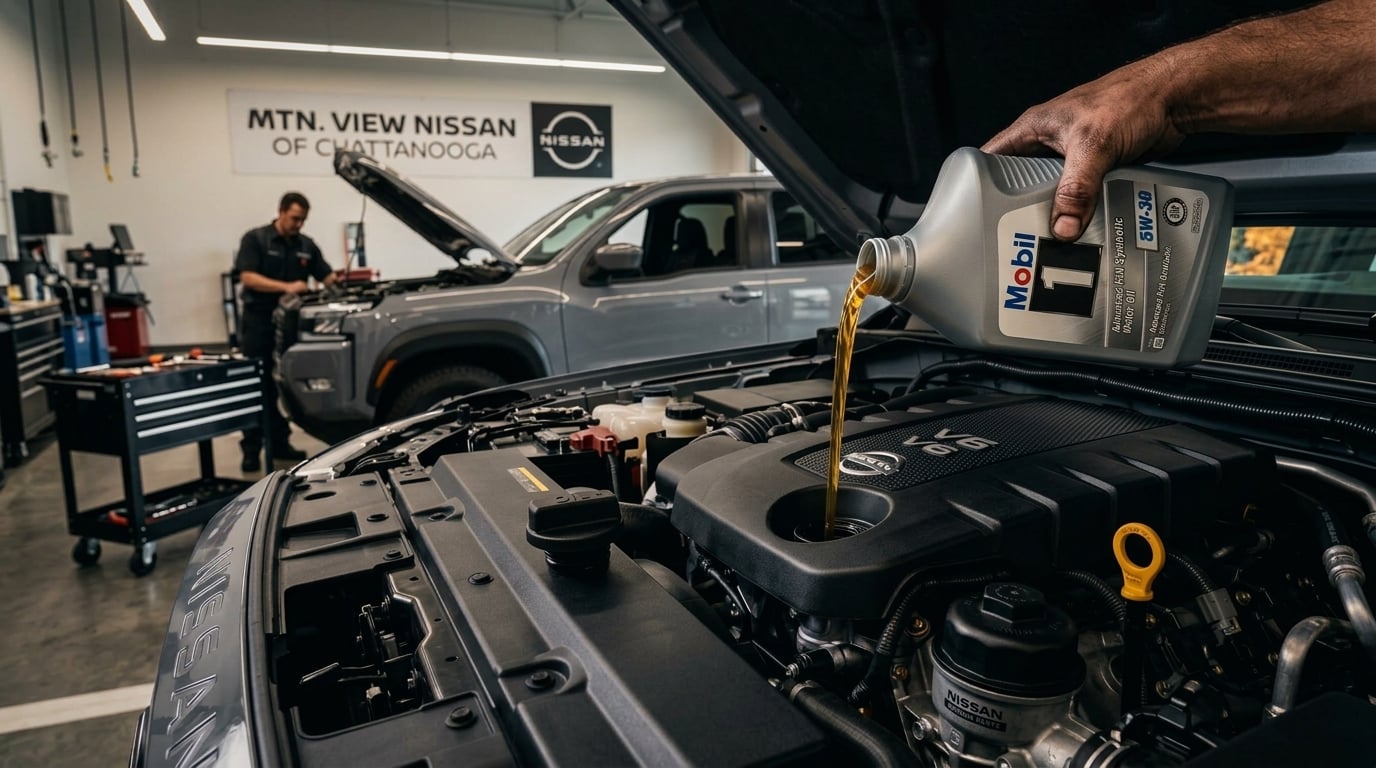
What Tire Size Does the 2026 Nissan Pathfinder Use

What Tire Size Does the 2026 Nissan Pathfinder Use?

The 2026 Nissan Pathfinder uses three primary factory tire sizes across its lineup: standard P255/60HR18 all-season tires on S, SV, and SL trims; rugged P265/60R18 all-terrain tires on the Rock Creek trim; and lower-profile P255/50R20 all-season tires on the Platinum trim. Choosing or replacing tires for a midsize three-row crossover requires maintaining the exact load index and speed rating specified by the factory. Navigating steep elevation changes along the Appalachian Ridge-and-Valley terrain in Chattanooga demands precise rubber fitment to ensure proper chassis stability, braking distance, and electronic safety system calibration. The Pathfinder carries high crash-test evaluations from safety authorities, and preserving that safety profile relies directly on maintaining correct original equipment tire dimensions. Whether driving standard 18-inch wheels or upgraded 20-inch alloy rims, using factory-approved specifications helps keep speedometer readings accurate and preserves transmission shift logic on the 3.5-liter V6 engine. Drivers seeking local guidance on factory fitment can reach our service advisors at (423) 756-1500 or visit our Market Street service center for complete tire support. Table of Contents What Factory Tire Sizes Come Standard Across Nissan Pathfinder Trims? Which Factory Tire Brands Come Installed on a New Nissan Pathfinder? How Often Should You Rotate and Replace Tires on a Nissan Pathfinder? How Do Michelin and Continental Tires Compare for a Nissan Pathfinder? Frequently Asked Questions About Nissan Pathfinder Tire Care Where to Schedule Nissan Pathfinder Tire Service in Chattanooga What Factory Tire Sizes Come Standard Across Nissan Pathfinder Trims? Factory tire fitments on the Pathfinder vary by trim level to match each model's intended driving purpose and suspension tuning. Base and mid-tier models prioritize ride compliance and dampening over broken pavement, whereas performance-oriented and luxury trims adjust rim diameter and sidewall height accordingly. Pathfinder S, SV, and SL: Standard fitment features P255/60HR18 all-season tires mounted on 18-inch alloy wheels. The tall sidewall on these 60-series tires delivers extra cushioning against potholes and pavement joints. Pathfinder Rock Creek: Equipped with P265/60R18 all-terrain tires mounted on 18-inch beadlock-style alloy wheels. This wider tread face and reinforced sidewall pattern provide enhanced off-road grip for gravel trails and dirt access roads. Pathfinder Platinum: Features P255/50R20 all-season tires on 20-inch machined alloy wheels. The shorter 50-series sidewall increases lateral stiffness, providing sharper steering response during high-speed cornering and highway cruising. Every trim level includes an underbody-mounted compact spare tire with a crankdown mechanism to ensure emergency mobility without compromising interior cargo space. When ordering direct-fit replacements or replacement wheels, drivers can consult our OEM parts department to select factory-authorized tire specifications matched to their specific vehicle trim. Which Factory Tire Brands Come Installed on a New Nissan Pathfinder? Nissan partners with tier-one tire manufacturers to equip the Pathfinder with original equipment rubber designed for quiet operation and long tread life. Depending on production date, trim level, and wheel size, new Pathfinder models feature factory fitments from major brands including Hankook, Michelin, and Bridgestone. Higher trims rolling on 20-inch wheels, such as the Platinum, frequently come equipped with Hankook Dynapro HP2 tires in size 255/50R20 105H M+S. This premium highway all-season tire utilizes a high-grip silica compound and rigid center rib to minimize tread noise while delivering predictable dry and wet handling. Other factory configurations include Michelin Primacy LTX or Bridgestone Alenza Sport A/S compounds engineered specifically to low-rolling-resistance standards. For the off-road-oriented Rock Creek trim, Nissan fits all-terrain tires featuring deeper void ratios and shoulder blocks. These specialized compounds balance moderate trail traction with low highway hum, keeping the interior cabin hushed at cruising speeds. Replacing original equipment tires with equivalent tier-one compounds maintains factory tuned chassis dynamics and prevents premature wear on all-wheel-drive transfer cases. How Often Should You Rotate and Replace Tires on a Nissan Pathfinder? Nissan Pathfinder tires should be rotated every 5,000 to 7,500 miles to promote even treadwear across all four positions. Regular rotation balances the distinct wear patterns created by front-wheel drive weight bias and steering forces, significantly extending overall tire lifespan. Rotation Schedule: Align tire rotations with routine 5,000-mile oil change appointments to keep wear symmetrical. Replacement Lifespan: Average factory and replacement tire lifespans range from 45,000 to 65,000 miles, depending on rubber hardness, road surfaces, and alignment consistency. Recommended Pressure: Maintain a cold tire pressure of 35 PSI across all four tires, as noted on the driver door jamb placard. Owners carrying outdoor gear or driving near Lookout Mountain often notice accelerated outer-shoulder tread wear on front tires due to frequent elevation changes and curving roads. Inspecting tread depth regularly with a tire gauge ensures tread depth remains well above the legal minimum of 2/32 inches. When drivers bring their vehicle in for routine care, they frequently ask whether rotating tires every 5,000 miles is necessary if their commute consists primarily of straight highway driving. Performing consistent rotations prevents front tires from developing heel-toe tread wear, preserving a quiet cabin ride and maximizing tire mileage. How Do Michelin and Continental Tires Compare for a Nissan Pathfinder? Selecting replacement tires for a Pathfinder often comes down to choosing between premium tire manufacturers like Michelin and Continental. Both brands produce exceptional replacement tires for three-row crossovers, but each brand emphasizes distinct performance characteristics. Michelin tires—such as the Defender LTX M/S or Primacy series—are engineered around maximum tread longevity and acoustic comfort. Michelin utilizes proprietary rubber compounds that resist uneven wear, frequently delivering usable tread life beyond 60,000 miles. The firm shoulder construction provides excellent tracking stability on long interstate drives, making them a preferred option for drivers who prioritize quiet cabin comfort and maximum mileage between replacements. Continental tires—such as the CrossContact LX25—excel in wet-weather braking efficiency and hydroplaning resistance. Continental designs tire tread patterns with wide circumferential grooves and dense siping that clear water effectively during heavy rain. While Continental options may wear slightly faster than comparable Michelin options under aggressive driving, they offer a suppler ride feel over sharp pavement impacts along with competitive replacement pricing. Frequently Asked Questions About Nissan Pathfinder Tire Care Q: What is the recommended cold tire pressure for a 2026 Nissan Pathfinder? The factory recommended cold tire pressure for a 2026 Nissan Pathfinder is 35 PSI for all four road tires. Checking tire inflation pressure in the morning before driving ensures accurate readings, which helps maintain fuel economy and prevents uneven shoulder wear. Q: Does changing tire size affect the Pathfinder's ProPILOT Assist safety features? Installing non-standard tire dimensions alters rolling circumference, which can throw off speedometer readings and miscalibrate distance-calculating algorithms used by ProPILOT Assist and automatic emergency braking systems. Always stick to factory-approved sizes like P255/60HR18 or P255/50R20 to keep advanced driver-assist safety tech operating properly. Q: How do 18-inch and 20-inch Pathfinder tires differ in overall ride quality? Standard 18-inch tires feature taller sidewalls that absorb road bumps and potholes more effectively, yielding a softer ride. Optional 20-inch tires feature shorter sidewalls that enhance steering feedback and cornering stability, though they transmit slightly more pavement texture into the cabin. Q: Do all-wheel-drive Pathfinder models require replacing all four tires at once? Replacing all four tires simultaneously on all-wheel-drive models prevents tread depth variances that strain the transfer case and differential electronics. If replacing only two tires is unavoidable, the new tires must match the existing tires in brand, model, size, and load index, and be installed on the rear axle. Q: Where can I book a professional tire inspection or rotation appointment? You can book routine tire maintenance, computerized wheel alignments, or full replacement services by scheduling tire service online with certified technicians who utilize factory-calibrated tire equipment. Where to Schedule Nissan Pathfinder Tire Service in Chattanooga Maintaining proper tire health requires expert inspection, precise balancing, and factory-aligned installation procedures. Our certified service team specializes in complete tire care for every generation of the Nissan Pathfinder in Chattanooga, ensuring your crossover handles predictably on every road condition. From routine tread depth checks and pressure resets to mounting new tier-one replacement tires, our facility utilizes state-of-the-art balancing machines and alignment racks tailored specifically to Nissan chassis specs. Keeping your tires properly rotated and inflated preserves all-wheel-drive system health, maximizes fuel efficiency on your 3.5-liter V6, and protects your family on every trip. To consult with our factory-trained advisors or arrange your next service visit, contact our team directly at (423) 756-1500 or visit our Chattanooga service center today. © 2026 Mtn View Nissan of Chattanooga. All rights reserved.
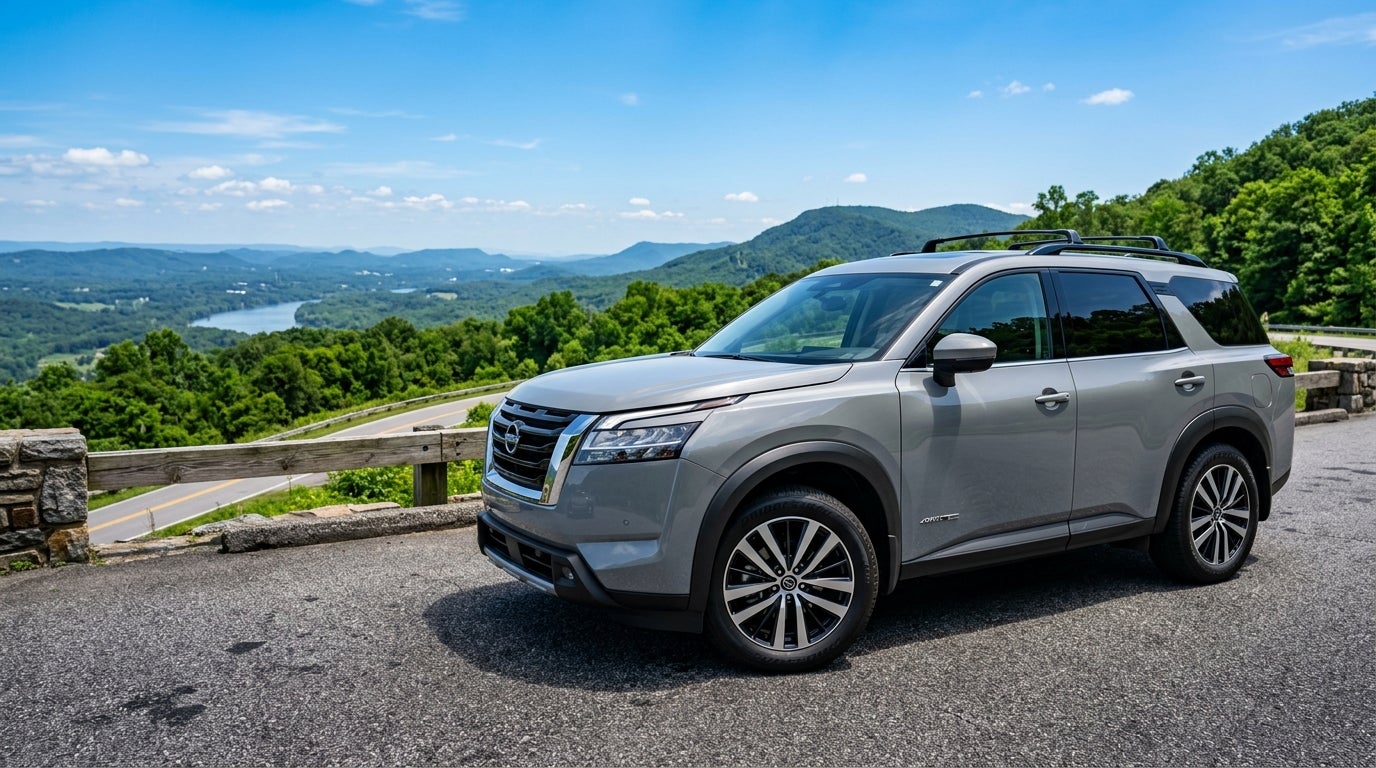
2026 Nissan Pathfinder: Best Family SUV for Chattanooga Families

2026 Nissan Pathfinder: Best Family SUV for Chattanooga Families

The 2026 Nissan Pathfinder is the strongest choice for active families who need three rows of seating, confident all-wheel-drive capability, and a well-rounded technology suite at a competitive mid-range price. The SV, SL, Rock Creek, and Platinum trim levels cover a wide spectrum from practical entry-level value to fully loaded luxury, making the Pathfinder a versatile pick for households that split their week between city commutes and weekend outdoor adventures. Table of Contents How Well Does the 2026 Nissan Pathfinder Serve Chattanooga Families and Outdoor Enthusiasts? Rugged Style That Fits Chattanooga's Urban and Outdoor Spirit in the 2026 Nissan Pathfinder Power and Control for Tackling Lookout Mountain and Tennessee River Roads with the 2026 Nissan Pathfinder Spacious Cabin Designed for Family Days and Creative Projects with the 2026 Nissan Pathfinder Seamless Smartphone Integration and Infotainment for Tech-Savvy 2026 Nissan Pathfinder Drivers Advanced Safety Systems Built for Navigating Busy Streets and Waterfront Parks in the 2026 Nissan Pathfinder 2026 Nissan Pathfinder Trim Pricing Breakdown: From SV 2WD to Rock Creek 4WD Warranty, Maintenance, and Service Insights for 2026 Nissan Pathfinder Owners Frequently Asked Questions from Buyers About the 2026 Nissan Pathfinder How Well Does the 2026 Nissan Pathfinder Serve Chattanooga Families and Outdoor Enthusiasts? The 2026 Nissan Pathfinder is purpose-built for exactly the kind of life Chattanooga families lead: structured weekday routines that give way to spontaneous weekend escapes into the surrounding ridge-and-valley terrain. It delivers three rows of seating, available all-wheel drive, and a technology-forward cabin that handles school pickups and hiking gear with equal composure. Chattanooga sits at the intersection of urban energy and natural access. Families here are not choosing between a city car and a trail runner — they need one vehicle that does both. The Pathfinder's available Intelligent 4WD system addresses the rolling hills and curvy approach roads around Lookout Mountain, while its spacious interior makes a full-day outing to the Tennessee Aquarium genuinely comfortable rather than cramped. The lineup spans seven distinct configurations across the trims covered here: SV 2WD, SV 4WD, SL 2WD, SL 4WD, Rock Creek 4WD, Platinum 2WD, and Platinum 4WD. That range means a dual-income household earning in the $60K–$90K range can find a trim that hits their budget without sacrificing the features that matter most — whether that's the rugged styling of the Rock Creek 4WD or the premium interior appointments of the Platinum. Shoppers who are still weighing their options or considering trading in an existing vehicle can browse our pre-owned inventory to see what comparable SUVs look like in the current market, which can sharpen a buying decision considerably. For most Chattanooga families, though, the 2026 Pathfinder's combination of people-hauling capacity, available AWD, and Nissan's proven reliability record makes a compelling case on its own terms. Rugged Style That Fits Chattanooga's Urban and Outdoor Spirit in the 2026 Nissan Pathfinder The 2026 Nissan Pathfinder in Chattanooga wears a design that reads confidently whether it's parked in the Southside arts district or staged at a trailhead. Nissan's current design language for the Pathfinder leans into angular body lines, a bold V-motion front grille, and a wide, planted stance that communicates capability without resorting to the exaggerated proportions that make some three-row SUVs feel awkward in urban settings. The front fascia features standard LED headlights on higher trims that give the Pathfinder a crisp, modern face — practical for navigating the Tennessee River waterfront's mix of pedestrian activity and evening low-light conditions. The body sides carry strong character lines that add visual length and reinforce the SUV's road presence. At the rear, LED taillights wrap cleanly into the tailgate design, tying the profile together. The Rock Creek 4WD trim takes the exterior a meaningful step further with trail-ready visual cues that suit Chattanooga's outdoor culture — unique badging, distinctive exterior accents, and a look that signals genuine off-pavement intent. For families who want the capability of Intelligent 4WD paired with styling that reflects an active lifestyle, the Rock Creek is a natural fit. Roof rails on equipped trims make it straightforward to add a bike rack for rides along the Tennessee Riverwalk or a cargo carrier for camping gear headed toward the Appalachian backcountry. The Pathfinder's proportions are substantial enough to carry a full family's gear without feeling bloated in a parking garage or a crowded festival lot. If you're planning to trade in your current vehicle before stepping into a new Pathfinder, you can get a quick estimate of your trade-in value before you visit — a helpful first step when budgeting for the trim level that matches your lifestyle. Power and Control for Tackling Lookout Mountain and Tennessee River Roads with the 2026 Nissan Pathfinder Chattanooga's terrain is not flat. The ridge-and-valley geography means that even routine drives involve grade changes, sweeping curves, and the occasional steep descent — conditions where a capable powertrain and a well-tuned drivetrain make a real difference in driver confidence. The 2026 Nissan Pathfinder is powered by a naturally aspirated V6 engine paired with a smooth-shifting automatic transmission. The V6 delivers a broad, accessible power band that suits the Pathfinder's role as a family hauler: enough low-end torque to merge confidently onto the highway with a full passenger load, and enough top-end pull to handle the sustained grades that lead up toward Lookout Mountain without hunting through gears or straining the engine. The available Intelligent 4WD system — standard on all 4WD trims including the SV 4WD, SL 4WD, Rock Creek 4WD, Platinum 4WD — monitors road conditions and distributes torque between the front and rear axles proactively. On wet pavement after a Tennessee rainstorm, on leaf-covered switchbacks in autumn, or on the occasional unpaved access road leading to a trailhead, the system works in the background so the driver doesn't have to think about it. The Rock Creek 4WD trim pairs the Intelligent 4WD hardware with additional off-road tuning, making it the most capable configuration in this lineup for families who want to explore beyond paved surfaces. The SV 4WD and SL 4WD trims bring the same drivetrain in a slightly more road-focused package. For families who primarily drive Chattanooga's urban grid and the Tennessee River corridor, the SV 2WD, SL 2WD, and Platinum 2WD trims deliver the same V6 powertrain with front-wheel drive — a sensible, efficient choice when all-terrain capability is not the priority. Keeping the Pathfinder running at its best over time is straightforward through Mtn View Nissan of Chattanooga's genuine Nissan parts department, where factory-spec components are available for routine maintenance and any service needs that come up over the ownership cycle. Spacious Cabin Designed for Family Days and Creative Projects with the 2026 Nissan Pathfinder Three rows of seating are the Pathfinder's single most practical feature for Chattanooga families, and Nissan has engineered the cabin so that all three rows are genuinely usable rather than a theoretical selling point. The second row offers comfortable headroom and legroom for adult passengers on longer drives — the kind of sustained trip you make when heading to a Tennessee Aquarium visit or a full-day Riverbend Festival outing. The third row is accessible and fits children and smaller adults without the contortion exercise that plagues some competitors. The Platinum trims step up with premium seating materials and additional comfort features that make the cabin feel more refined — a meaningful upgrade for buyers who spend significant time in the vehicle. SL trims offer a well-appointed middle ground, while SV trims keep the focus on functional comfort at a more accessible price point. Cargo management is where the Pathfinder's flexibility really shows. With the third row folded, the cargo area opens up enough to swallow bicycles, climbing gear, or the kind of miscellaneous load that a Chattanooga weekend generates — a cooler, a tent, a stroller, and still room for a bag of groceries picked up on the way home. Fold both rear rows flat and the space becomes genuinely van-like for larger loads. The front cabin benefits from a driver-focused layout with logical controls, good outward visibility, and storage solutions that accommodate the day-to-day reality of family life: a large center console, door pockets deep enough for water bottles, and second-row access to USB charging so passengers are not fighting over the front outlets. Climate control on upper trims extends to rear-seat passengers — an underappreciated feature when Chattanooga summers push temperatures into the 90s and the back-row passengers are the first to feel it. Seamless Smartphone Integration and Infotainment for Tech-Savvy 2026 Nissan Pathfinder Drivers The 2026 Nissan Pathfinder centers its technology experience around a touchscreen infotainment system with Apple CarPlay and Android Auto integration — the baseline expectation for Chattanooga's growing cohort of tech-sector professionals who treat smartphone connectivity as a non-negotiable, not a premium feature. NissanConnect ties the infotainment system into a broader connected-services ecosystem that includes remote start, door lock and unlock, vehicle health reports, and navigation assistance accessible from a smartphone app. For a family managing a busy weekly schedule — school runs, downtown commutes, weekend excursions — the ability to check the vehicle's status or pre-condition the cabin temperature from a phone before heading out is a genuine convenience. The touchscreen interface is logically organized, with physical shortcut buttons retained for the functions drivers reach for most often — volume, tuning, climate — so the system does not force eyes off the road for routine adjustments. Higher trims in the Pathfinder lineup add a larger display and additional feature depth, including enhanced navigation with real-time traffic data that is useful for navigating Chattanooga's riverfront corridors and downtown grid during peak hours. Wireless charging on equipped trims eliminates the cable clutter that accumulates on a family vehicle's center console. Multiple USB ports — including rear-seat access points — keep everyone's devices topped off on longer drives. The available Bose premium audio system on upper trims delivers noticeably better sound quality than the base speakers, a worthwhile upgrade for drivers who spend meaningful time in the vehicle and care about how their music actually sounds. Voice recognition through the infotainment system allows hands-free control of navigation, phone calls, and media — a safety-adjacent feature that reduces the temptation to interact with the screen manually while moving through traffic. Advanced Safety Systems Built for Navigating Busy Streets and Waterfront Parks in the 2026 Nissan Pathfinder Nissan's Safety Shield 360 suite comes standard across the 2026 Pathfinder lineup in Chattanooga, which means even the entry-level SV trims arrive with a meaningful collection of active safety technology — not a stripped-down base that requires an expensive package to become safe. Safety Shield 360 encompasses automatic emergency braking with pedestrian detection, blind-spot warning, rear cross-traffic alert, lane departure warning, and high-beam assist. In Chattanooga's pedestrian-active zones — the waterfront parks, the Walnut Street Bridge corridor, and the Southside's festival streets — automatic emergency braking with pedestrian detection is the feature that earns its keep most directly. It monitors for pedestrians entering the vehicle's path and applies braking force when the driver does not respond quickly enough. Blind-spot warning and rear cross-traffic alert address the practical reality of parking and lane changes in urban environments where sight lines are frequently compromised by larger vehicles, cyclists, and the unpredictable flow of city traffic. Higher trims add ProPILOT Assist, Nissan's hands-on driver assistance technology that combines adaptive cruise control with lane-centering steering. On the highway stretches of a longer drive, ProPILOT Assist reduces driver fatigue by maintaining a set following distance and keeping the vehicle centered in its lane — the system requires the driver to keep hands on the wheel, maintaining engagement while reducing the workload on monotonous highway segments. Rear automatic braking reduces low-speed collision risk when reversing — a practical feature in tight parking situations. The available Intelligent Around View Monitor stitches together a 360-degree bird's-eye view of the vehicle's surroundings, making parking in crowded lots and tight urban spaces considerably less stressful. The structural foundation underneath all of these active systems is Nissan's reinforced body construction, designed to manage crash energy effectively and protect all three rows of passengers. 2026 Nissan Pathfinder Trim Pricing Breakdown: From SV 2WD to Rock Creek 4WD No specific MSRP figures are available in the catalog data provided for this article, so exact pricing for each trim should be confirmed directly with Mtn View Nissan of Chattanooga. What the trim structure does make clear is a logical value ladder that helps buyers identify the right entry point for their budget and needs. The SV 2WD represents the most accessible starting point in this lineup — front-wheel drive, the full V6 powertrain, Safety Shield 360 standard, and NissanConnect infotainment. It is the trim for buyers who want a capable three-row SUV without paying for AWD hardware they will rarely use on Chattanooga's predominantly paved road network. The SV 4WD adds Intelligent 4WD for buyers who want all-weather and light off-road confidence without stepping into a higher feature tier. The SL 2WD and SL 4WD trims build on the SV foundation with upgraded interior materials, additional technology content, and comfort features that make the cabin feel noticeably more premium. The Rock Creek 4WD occupies a distinct position in the lineup — it is the off-road-oriented configuration with unique exterior styling, AWD as standard, and the trail-ready tuning that suits Chattanooga's surrounding terrain. Buyers who want capability and character in the same package will find the Rock Creek the most compelling choice. The Platinum 2WD and Platinum 4WD sit at the top of this lineup with the most complete feature set: premium seating, the largest infotainment display, the Bose audio system, and the full suite of available driver assistance technology. For buyers who want the Pathfinder in its most refined form, the Platinum is the answer. To see what is currently in stock, browse our available new Pathfinder inventory at Mtn View Nissan of Chattanooga. When you are ready to move forward, you can also start your financing application online to streamline the purchase process. Warranty, Maintenance, and Service Insights for 2026 Nissan Pathfinder Owners Nissan backs the 2026 Pathfinder with a factory warranty program that provides meaningful coverage across the ownership period. While specific warranty terms should be confirmed at the time of purchase, Nissan's standard coverage structure includes a basic limited warranty, a powertrain warranty, and corrosion/perforation protection — providing a layered safety net that covers the components most likely to generate significant repair costs. For buyers who are considering a certified pre-owned Nissan rather than a new Pathfinder, Mtn View Nissan of Chattanooga's certified pre-owned vehicle inventory offers factory-backed coverage on inspected, reconditioned vehicles — a strong alternative for shoppers whose budget prioritizes value over a first-model-year purchase. Routine maintenance on the Pathfinder's V6 powertrain follows Nissan's published service schedule, which covers oil changes, tire rotations, brake inspections, and fluid checks at defined intervals. Staying current with the schedule is the single most effective way to protect the powertrain warranty and keep the vehicle performing at the level Nissan engineered it to. Mtn View Nissan of Chattanooga's service department is staffed with factory-trained technicians who work specifically on Nissan vehicles. Scheduling a maintenance appointment is straightforward — you can book your service visit online at a time that fits your schedule, keeping the Pathfinder in peak condition without disrupting a busy family week. Frequently Asked Questions from Buyers About the 2026 Nissan Pathfinder Q: Does the 2026 Nissan Pathfinder come with all-wheel drive as standard, or is it an option? All-wheel drive is not standard across every trim — it depends on the configuration you choose. The SV, SL, and Platinum trims are each available in both 2WD and 4WD versions, so buyers can select the drivetrain that matches their needs and budget. The Rock Creek is offered exclusively as a 4WD model, reflecting its off-road focus. For Chattanooga families who regularly navigate wet roads, hilly terrain, or unpaved access routes, the 4WD variants are worth the additional investment. Q: How many passengers can the 2026 Pathfinder carry? The 2026 Nissan Pathfinder is a three-row SUV configured to carry up to eight passengers depending on the seating layout of the specific trim. The second row on certain configurations is available with a bench seat to maximize passenger capacity, while other trims offer captain's chairs for improved comfort and easier third-row access. If carrying a full group — two adults and multiple children — to a Tennessee Aquarium outing or a festival on the waterfront is a regular scenario, the Pathfinder's three-row layout handles it without compromise. Q: What safety technology comes standard on every 2026 Pathfinder trim? Nissan Safety Shield 360 is standard across all SV, SL, Rock Creek, and Platinum trims. This suite includes automatic emergency braking with pedestrian detection, blind-spot warning, rear cross-traffic alert, lane departure warning, and high-beam assist. Buyers do not need to upgrade to a higher trim or purchase a separate package to access these core active safety features — they are included from the base of the lineup covered here. Q: Is the 2026 Pathfinder a good fit for Chattanooga's mix of city driving and outdoor excursions? It is a strong fit for exactly that combination. The available Intelligent 4WD handles the ridge-and-valley terrain around Lookout Mountain and the wet-weather conditions common to the Tennessee River corridor. The three-row cabin accommodates the gear loads that active weekends generate. And the standard Safety Shield 360 suite addresses the pedestrian-heavy urban environments around the waterfront parks and Southside district. The Rock Creek 4WD is the most purpose-matched trim for buyers who split time evenly between city and trail. Q: How do I get more information or schedule a test drive at Mtn View Nissan of Chattanooga? The team at Mtn View Nissan of Chattanooga is available to answer questions, confirm current pricing, and set up a test drive. You can reach the dealership directly at (423) 756-1500 or visit the showroom at 2100 Market St, Chattanooga. The sales team can walk you through the full Nissan Pathfinder trim lineup, compare in-stock configurations, and help you identify the model that fits your family's daily routine and weekend adventures. © 2026 Mtn View Nissan of Chattanooga. All rights reserved.
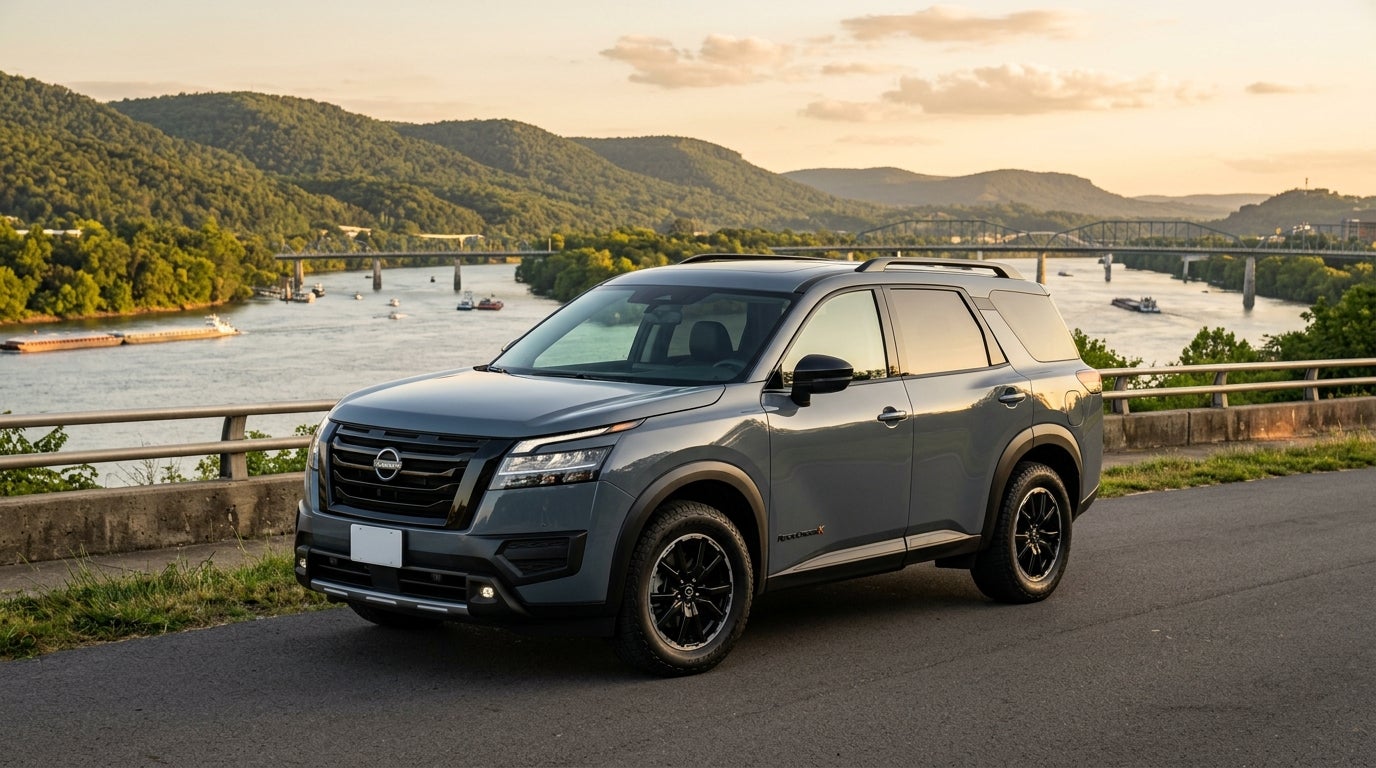
Contact Us

Fill out this form below and we'll contact you shortly
*Required Fields