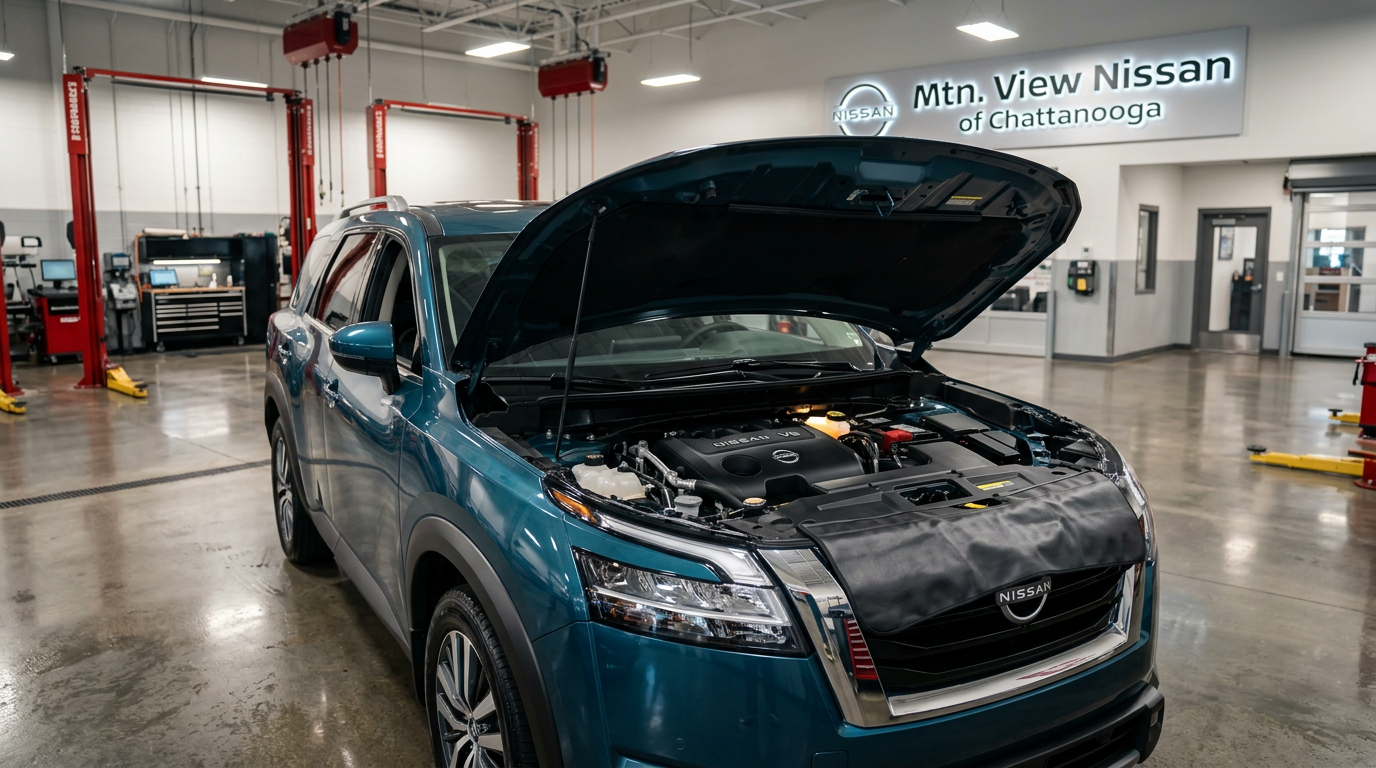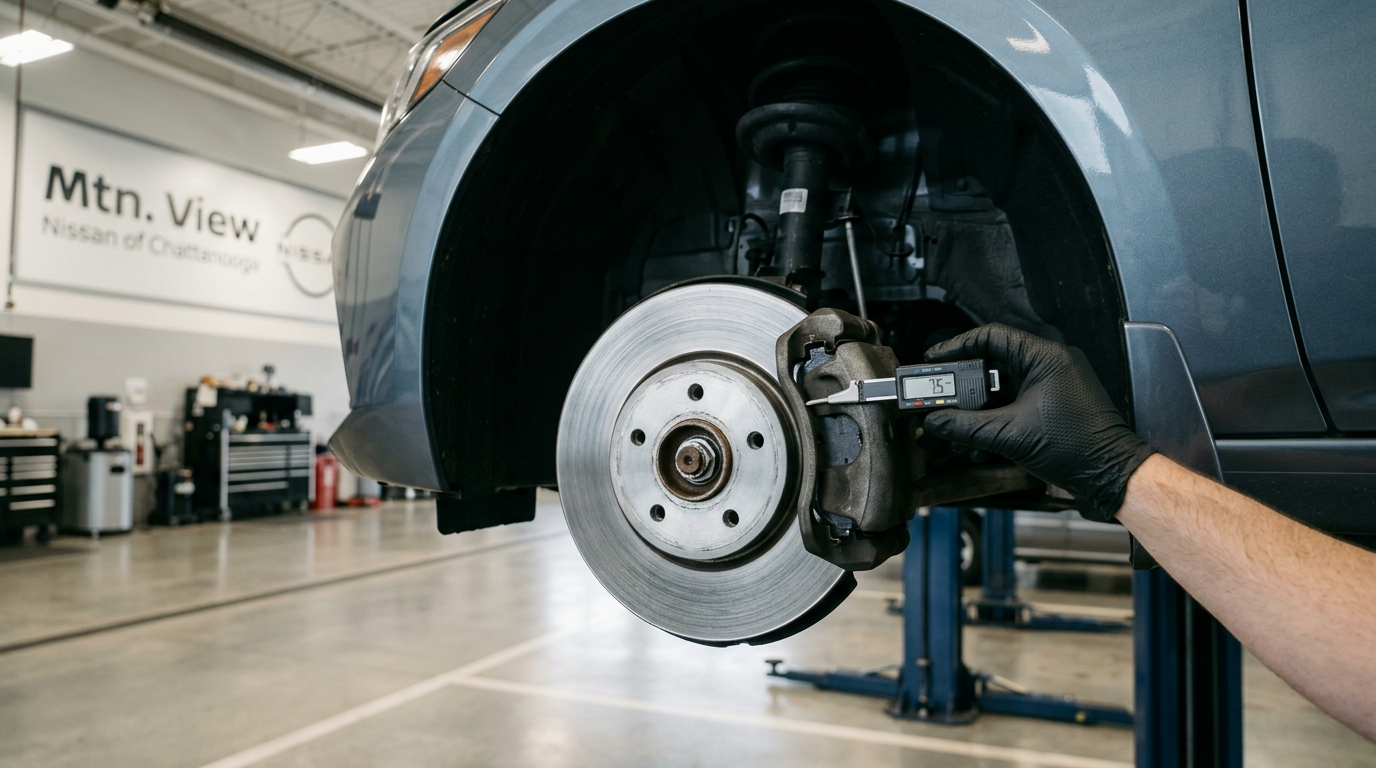
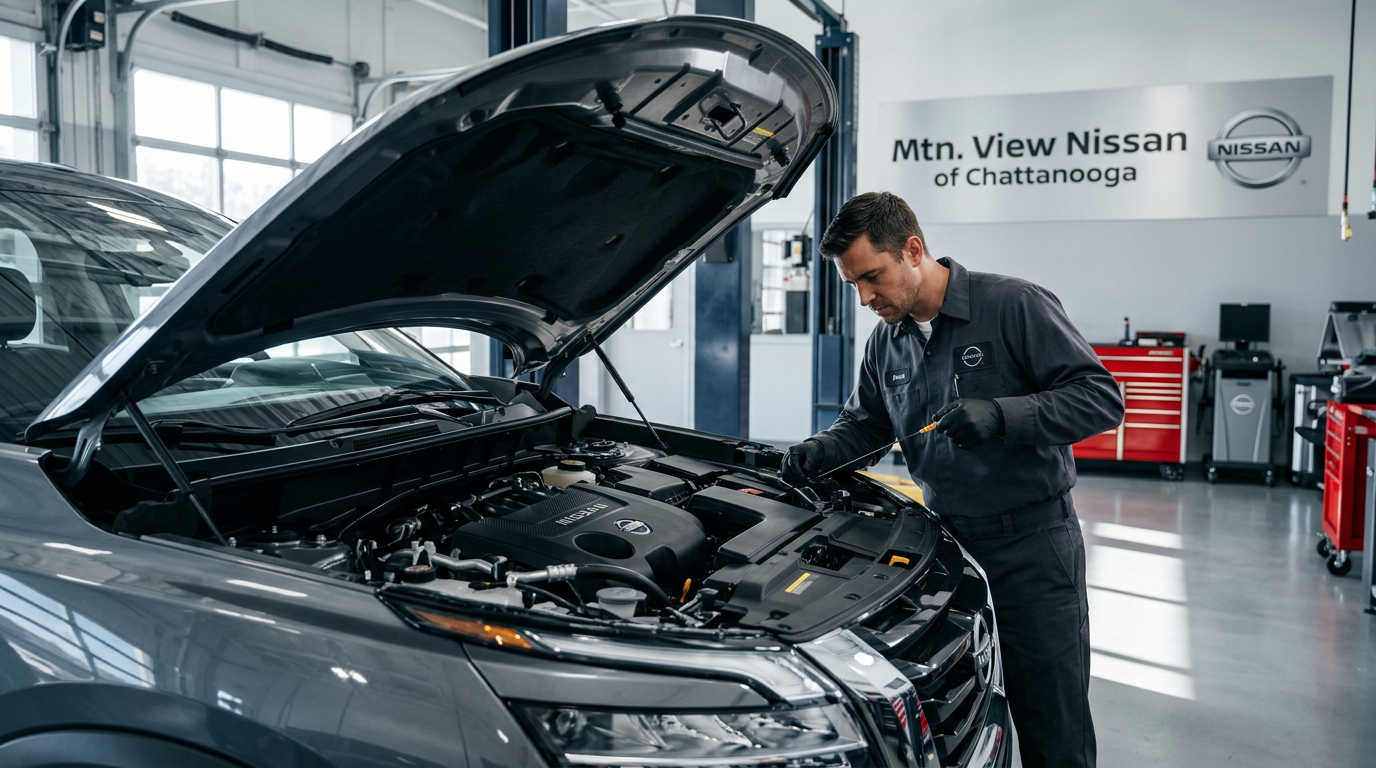
Nissan factory scheduled maintenance includes engine oil and filter replacements, tire rotations, brake system inspections, fluid level verifications, and comprehensive multi-point vehicle checks at regular intervals. As mileage accumulates, scheduled visits add vital component replacements, including engine air filters, in-cabin microfilters, brake fluid flushes, and spark plug installations, alongside drivetrain inspections. Adhering to these manufacturer guidelines preserves vehicle reliability, protects powertrain performance, and upholds your factory warranty protections.
Every model relies on tailored service sequences to sustain its mechanical health across varying driving conditions. For example, a 2027 Nissan Rogue powered by the 1.5L engine requires strict adherence to clean synthetic oil and fresh filter media to protect its turbocharger and variable compression components. A 2026 Nissan Altima operating with the 2.5L engine pairs routine oil changes with strict tire rotations to balance front-wheel tread wear. Meanwhile, a 2027 Nissan Frontier running a 3.8L V6 engine and a 9-speed automatic transmission demands periodic inspections of its transfer case, propeller shaft, and rear differential assemblies.
Our certified technicians carry out each scheduled task according to original factory specifications. Drivers can find complete certified care by visiting our team at 2100 Market St in downtown Chattanooga. To confirm your vehicle's next recommended checklist or ask about current service needs, give our service department (423) 756-1500.
Table of Contents
- What Are the Standard Factory Scheduled Maintenance Intervals for Nissan Vehicles?
- What Is Performed During Nissan's 30,000-Mile Factory Scheduled Maintenance?
- Why Does a Nissan CVT Require Genuine Nissan NS-2 or NS-3 Fluid?
- Dealer vs. Independent Shop: Which Is Right for Nissan Scheduled Maintenance?
- Nissan Factory Maintenance: Costs, Prepaid Plan Coverage, and Service Options
- How to Schedule Certified Nissan Factory Maintenance in Chattanooga
- Common Factory Maintenance Inquiries
- Keep Your Nissan Operating at Factory Standards
What Are the Standard Factory Scheduled Maintenance Intervals for Nissan Vehicles?
Standard Nissan factory maintenance follows a recurring cycle every 5,000 to 7,500 miles or every 6 months, whichever occurs first. Minor service appointments focus on baseline fluid changes, tire balancing checks, and chassis inspections, while major service milestones land at 15,000, 30,000, 60,000, and 105,000 miles. Because requirements vary depending on engine design, towing demands, and environmental factors, Nissan directs drivers to the owner's manual for model-specific requirements.
Driving habits dictate whether your vehicle operates under normal or severe operating schedules. Frequent short trips, stop-and-go traffic, driving in dusty conditions, or traversing steep inclines—such as climbing the ridge routes around Lookout Mountain—place higher thermal loads on engine oil and transmission fluids. Under severe operating conditions, maintenance intervals shorten to protect critical internal components from accelerated wear.
Key baseline intervals encompass:
- 5,000 to 7,500 Miles (or 6 Months): Replace engine oil and Genuine Nissan oil filter, rotate all four tires, inspect tire tread wear and pressure, inspect brake pads and rotors, and top off essential operating fluids.
- 15,000 Miles (or 12 Months): Complete all 5,000-mile services, install a new cabin microfilter, inspect suspension linkages, steering gear, exhaust systems, and brake lines.
- 60,000 Miles (or 48 Months): Repeat comprehensive intermediate checks, replace engine air and cabin filters, inspect drive belts, and test engine cooling mixture strength.
- 105,000 Miles: Replace spark plugs on compatible gasoline engines, inspect ignition wiring, and perform a complete engine coolant system exchange.
What Is Performed During Nissan's 30,000-Mile Factory Scheduled Maintenance?
The 30,000-mile service is a major maintenance milestone that replaces wear-heavy filtration media and hydraulic fluids while subjecting the complete chassis and powertrain to thorough mechanical inspection. This service replaces the engine oil, engine oil filter, engine air filter, in-cabin microfilter, and hydraulic brake fluid. Technicians also rotate the tires and conduct an extensive multi-point inspection covering the steering, suspension, exhaust, fuel delivery, and cooling systems.
Replacing hydraulic brake fluid at 30,000 miles is vital for vehicle safety. Conventional brake fluid naturally absorbs atmospheric moisture over time, which lowers its boiling point and introduces internal corrosion risks into calipers and anti-lock braking actuators. Flushing the system with fresh fluid restores firm pedal pressure and ensures heat resistance during rapid descents down valley highways.
Concurrently, replacing the engine air filter restores unrestricted airflow to the intake tract, maintaining clean combustion and peak fuel economy. Swapping the in-cabin microfilter traps seasonal pollen, road dust, and particulate matter before it reaches the interior ventilation system. Technicians also check the cooling system hoses, inspect CV boots for tears or grease loss, measure brake friction lining thickness, and evaluate drive axle joints for play.
Why Does a Nissan CVT Require Genuine Nissan NS-2 or NS-3 Fluid?
Nissan continuously variable transmissions require Genuine Nissan NS-2 or NS-3 fluid because their steel drive belts and variable pulleys depend on proprietary friction modifiers that conventional transmission fluids do not provide. Standard automatic transmission fluid alters the coefficient of friction between the steel belt and the conical pulley sheaves. Using incorrect lubricants leads to internal belt slippage, extreme operating temperatures, accelerated surface scoring, and catastrophic transmission failure.
The precise fluid designation depends on the transmission model and vehicle generation. Compact and midsize platforms utilizing modern Xtronic continuously variable transmissions, such as late-model configurations of the Nissan Rogue or Nissan Altima, require advanced Nissan NS-3 CVT Fluid. Earlier transmission designs specify Nissan NS-2 CVT Fluid, and these two formulations are not interchangeable. Our parts specialists maintain factory supplies for DIY enthusiasts and local owners through our dedicated Nissan parts department.
Beyond basic lubrication, Nissan CVT fluid serves as a hydraulic coupling medium that powers pulley adjustment actuators under precise electronic control. Standard multi-vehicle fluids cannot replicate the thermal stability, anti-foaming properties, or shear resistance required by high-pressure continuous variation. Certified technicians verify fluid quality and operating condition using specialized digital diagnostics during regular factory checkups.
Dealer vs. Independent Shop: Which Is Right for Nissan Scheduled Maintenance?
Authorized Nissan dealerships provide factory-certified technicians, vehicle-specific diagnostic scan tools, proprietary software recalibrations, and exclusive access to Genuine Nissan parts. While independent shops can manage basic fluid changes and routine filter swaps, they often lack the manufacturer diagnostic architecture required for complex vehicle subsystems. Modern driver-assist technologies, high-pressure turbochargers, and continuously variable transmissions demand factory tools to service properly.
Advanced driver assistance technologies require specialized calibration that aftermarket shops rarely support. When suspension alignment or steering components are serviced on vehicles equipped with Nissan Safety Shield 360 or ProPILOT Assist, technicians must recalibrate millimeter-wave radar sensors and windshield-mounted optical cameras using specialized target boards. Independent facilities lacking this manufacturer alignment equipment cannot verify sensor calibration after major chassis work.
Furthermore, dealership service records sync directly with Nissan's centralized North American warranty database. If a factory recall, service campaign, or warranty claim arises, having an unbroken electronic service history logged by factory-trained technicians simplifies warranty verification. Choosing authorized maintenance ensures every replacement seal, filter, and fluid meets strict original-equipment specifications.
Nissan Factory Maintenance: Costs, Prepaid Plan Coverage, and Service Options
Nissan maintenance costs vary by mileage tier, ranging from basic intermediate fluid services to comprehensive major inspections. To make recurring maintenance costs predictable, the Nissan Security+Plus Prepaid Maintenance plan locks in scheduled maintenance expenses in advance. Depending on the selected plan tier, coverage encompasses oil and filter changes, tire rotations, fluid top-offs, multi-point inspections, and scheduled mechanical replacements like engine air filters, brake fluid flushes, and spark plugs.
Prepaid plans protect owners against parts and labor price inflation while ensuring all replacements utilize Genuine Nissan parts installed by certified technicians. For vehicles not covered under a comprehensive plan, programs like the official Nissan 5-pack oil-and-filter agreement offer economical routine care. The 5-pack agreement covers oil and filter replacements for up to 30 months or 25,000 miles, whichever comes first, using factory-approved oil and filters.
Every routine maintenance visit also includes a complimentary multi-point inspection. Technicians measure brake pad thickness, test battery cold-cranking health, assess tire tread depths, and check belt conditions. Drivers looking to maintain their vehicle's recommended maintenance schedule can easily book a service appointment online to reserve a dedicated service bay.
How to Schedule Certified Nissan Factory Maintenance in Chattanooga
Local owners can schedule factory maintenance appointments 24/7 through our online portal, selecting their exact model, mileage, and required services with ease. For basic maintenance needs like oil changes, tire rotations, wiper blade installations, and multi-point health checks, our service center provides Nissan Express Service, allowing drivers to receive factory care without needing an advance appointment.
Whether you commute along the Tennessee River or manage daily drives through urban neighborhoods, keeping up with factory intervals preserves your vehicle's mechanical integrity. Our service center features dedicated bays, factory diagnostic tools, and certified technicians ready to maintain your vehicle.
To plan your visit or discuss scheduled maintenance requirements, reach out to our team at (423) 756-1500. When you are ready for maintenance, use these easy turn-by-turn directions to navigate directly to our Chattanooga service center.
Common Factory Maintenance Inquiries
Q: Can I use aftermarket motor oil in my turbocharged Nissan engine?
Yes, aftermarket engine oil may be used provided it meets the exact viscosity rating, API service classification, and ILSAC specifications detailed in your owner's manual. High-output turbocharged powerplants require oils with high thermal resistance to prevent sludge accumulation in turbocharger oil feed lines. Using Genuine Nissan motor oil guarantees the correct additive package to protect internal engine components.
Q: Does missing a single scheduled service void my factory powertrain warranty?
Missing a single maintenance interval does not automatically void your complete factory warranty, but it can complicate future claims. If an engine or transmission component fails and records show the failure stemmed from neglected lubrication or contaminated fluid, repairs related to that specific defect may be denied. Keeping organized receipts and service logs protects your warranty status.
Q: What should I do if my Nissan experiences a roadside breakdown?
If your vehicle suffers a mechanical breakdown or flat tire, utilize Nissan Roadside Assistance for authorized support and towing coordination. Covered vehicles under the basic factory warranty receive emergency towing, jump-starts, flat-tire changes, and lockout assistance. You can contact official emergency assistance directly by calling Nissan Roadside Assistance: 1-800-225-2476.
Q: How do driving conditions in hilly areas affect brake service intervals?
Frequent driving along steep descents and winding ridge topography accelerates friction wear on brake pads and rotors compared to flat highway travel. Extended downhill braking increases operational heat, which breaks down brake pad compound faster and degrades brake fluid sooner. Vehicles regularly traveling mountainous terrain should undergo visual pad measurements and rotor checks at every 5,000-mile interval.
Q: Are tire rotations strictly necessary if all four tires look evenly worn?
Regular tire rotations every 5,000 to 7,500 miles are essential even if visual wear appears balanced across the tread face. Front tires manage steering friction, cornering loads, and the majority of braking force, causing shoulder tread wear that differs significantly from rear tires. Rotating tires according to factory patterns balances tread wear, supports all-wheel drive performance, and maximizes tire lifespan.
Keep Your Nissan Operating at Factory Standards
Protecting your Nissan's long-term performance requires timely care, correct factory fluids, and certified technical oversight. Our factory-trained team at Mtn View Nissan of Chattanooga is equipped with the specialized diagnostic systems, proprietary tools, and genuine components needed to maintain your vehicle according to strict manufacturer engineering standards. Schedule your factory maintenance appointment today to ensure dependable performance for every journey ahead.
© 2026 Mtn View Nissan of Chattanooga. All rights reserved.