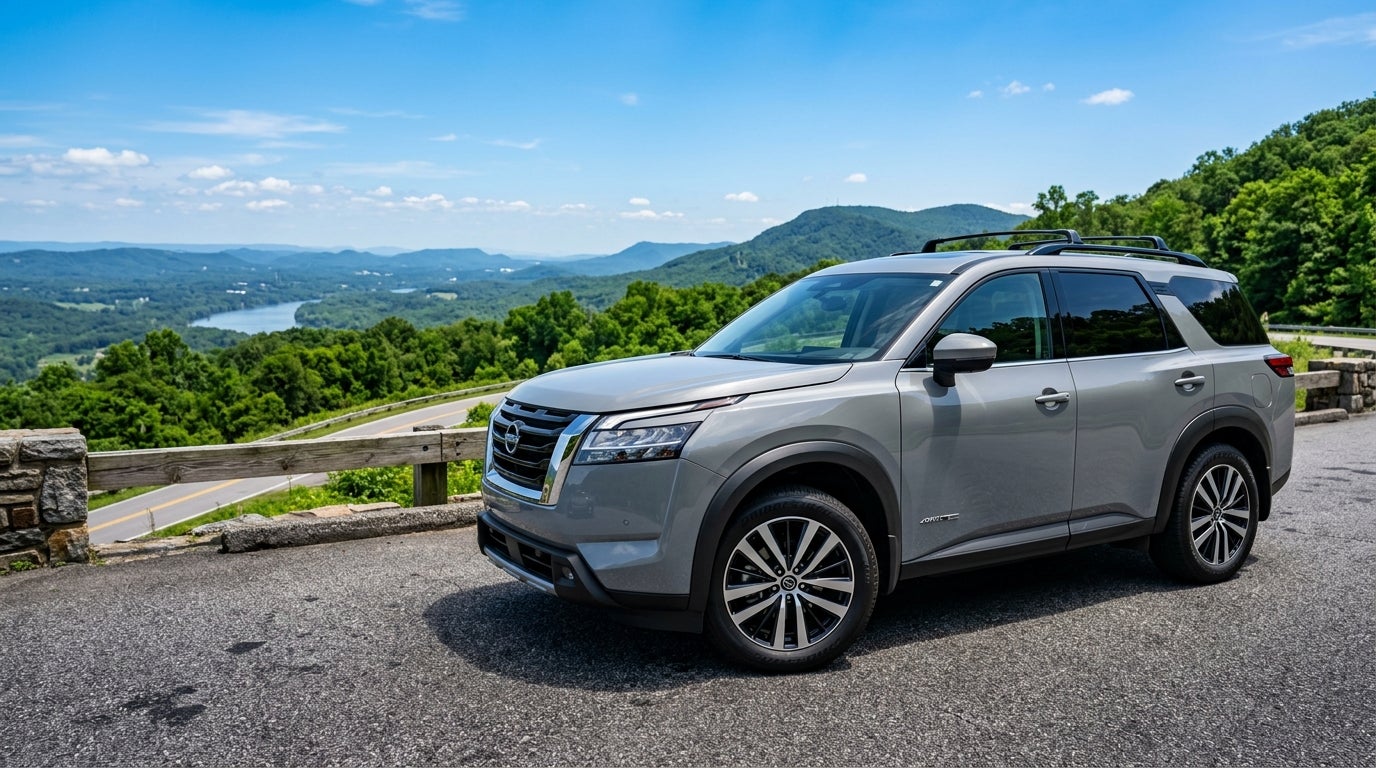

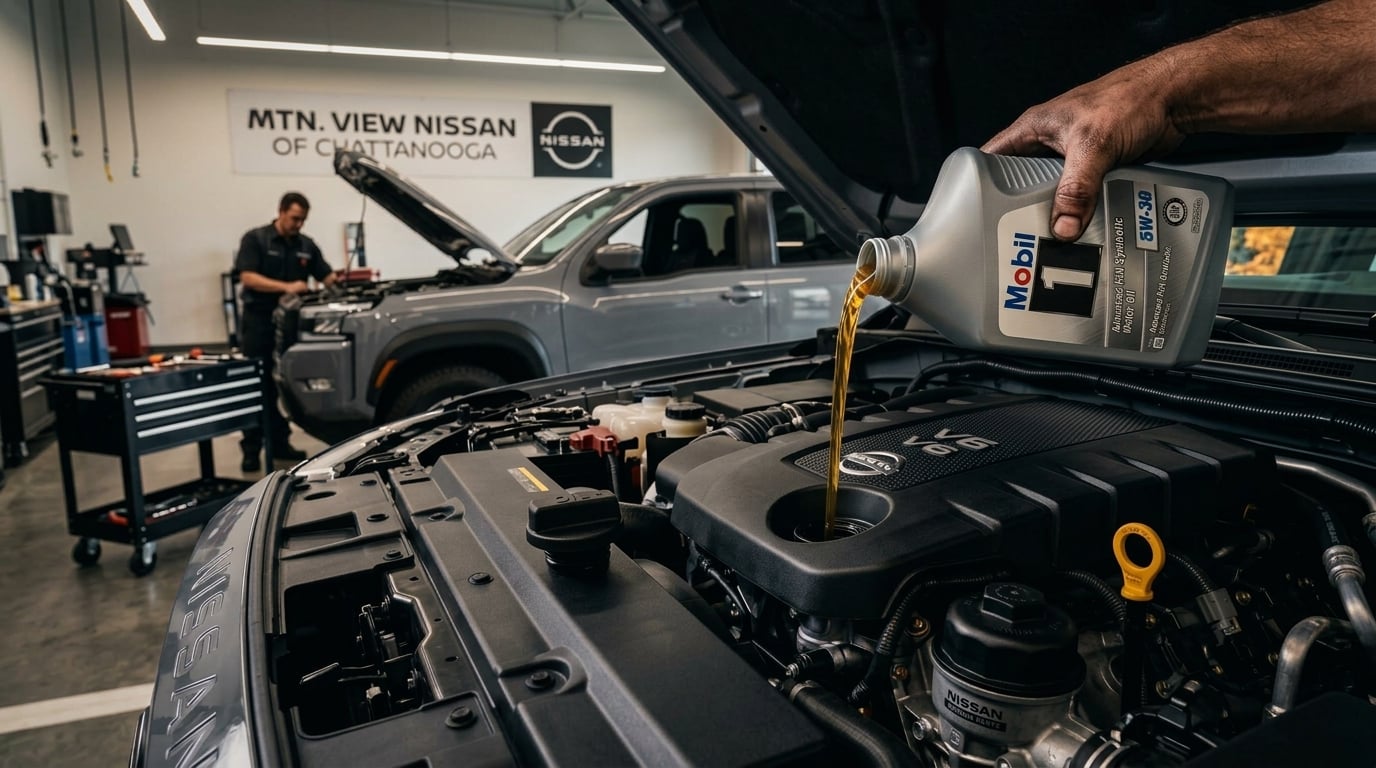
Proper lubrication is the foundation of long-term mechanical reliability for midsize pickup trucks. The direct-injected 3.8L V6 engine operates under high internal pressures and tight mechanical clearances. Fresh synthetic oil flows through internal galleys to lubricate the overhead camshafts, timing chain assemblies, and cylinder walls while absorbing heat generated during heavy acceleration and towing. Following factory-specified service schedules ensures that protective additives remain active, preventing harmful varnish buildup and keeping engine components operating within target temperature ranges.
At Mtn View Nissan of Chattanooga, our factory-trained service technicians deliver certified maintenance tailored specifically to your truck's engineering requirements. When you bring your vehicle to our Chattanooga service center, our team uses original equipment manufacturer parts and precision bulk filling systems calibrated for exact fluid volumes. Whether your truck serves as a daily work vehicle or a weekend adventure rig, maintaining correct oil health keeps your engine performing at its peak. You can schedule a service appointment online or give our service department a call at (423) 756-1500 to establish a consistent maintenance routine.
Table of Contents
- What Is the Recommended Oil Change Interval and Capacity for the 3.8L V6?
- What Counts as Severe Driving Conditions for a Nissan Frontier?
- What Happens If You Delay an Oil Change on Your Pickup?
- How Much Does a Dealership Oil Change Cost in Chattanooga?
- How Do You Reset the Maintenance Light and Inspect Standard Engine Features?
- Frequently Asked Questions About Nissan Frontier Maintenance
- Schedule Certified Nissan Service at Mtn View Nissan
What Is the Recommended Oil Change Interval and Capacity for the 3.8L V6?
The recommended oil change interval for a 2026 Nissan Frontier in Chattanooga, powered by the 3.8L V6 engine, is 7,500 miles or 12 months under standard operating conditions, with a precise oil refill capacity of 5.4 quarts when replacing the oil filter.Nissan engineers explicitly specify 0W-20 full synthetic motor oil that satisfies ILSAC GF-6A quality standards for this engine platform. Full synthetic formulations provide superior resistance to viscosity breakdown compared to conventional or synthetic-blend oils. At cold startup, 0W-20 oil flows rapidly to upper engine components, minimizing initial metal-on-metal friction before the engine reaches full operating temperature. Under heavy load, the synthetic base stock resists thermal oxidation, maintaining a stable protective film across bearing surfaces even during sustained highway driving or hill climbs.
Pairing high-grade synthetic oil with a genuine OEM oil filter is equally critical. Factory Nissan oil filters feature synthetic filter media engineered to capture microscopic contaminants without restricting oil pressure. They also incorporate an internal anti-drainback valve that holds oil within the filter housing when the engine is turned off. This prevents dry startups by ensuring instant oil pressure delivery the moment the ignition is engaged. Owners who prefer to perform their own fluid checks or source factory-approved components can consult our genuine OEM Nissan parts department to obtain exact-fit filters, crush washers, and approved lubricants.
What Counts as Severe Driving Conditions for a Nissan Frontier?
Severe driving conditions for a Nissan Frontier include regular trailer towing, hauling heavy bed payloads, driving on dusty or unpaved mountain roads, making frequent short trips under 5 miles in cool weather, and idling extensively in traffic. When a truck routinely encounters these operation demands, Nissan guidelines recommend reducing the oil service interval to 3,750 miles or 6 months.Operating a midsize pickup in diverse geographical environments directly impacts oil longevity. The Appalachian Ridge-and-Valley region surrounding Chattanooga presents distinct driving challenges, from steep grade climbs up Lookout Mountain to frequent stop-and-go traffic along river valley corridors. Towing a boat or camper places sustained high thermal loads on the engine, accelerating the rate at which engine oil oxidizes and breaks down. Similarly, driving along unpaved gravel routes or dirt access trails introduces fine airborne dust that can contaminate crankcase air if intake systems and filters are stressed.
Short-trip driving is another common severe condition that many truck owners overlook. When trips last less than 5 miles, the engine oil rarely reaches its full operating temperature of roughly 200 degrees Fahrenheit. As a result, moisture from combustion bypass and unburned fuel vapor accumulate inside the oil pan rather than evaporating off. Over time, this moisture reacts with oil additives to form acidic sludge, which degrades corrosion protection. When truck owners stop in to ask about maintenance schedules after heavy weekend trailering, our technicians walk them through these environmental factors to help choose the safest maintenance interval for their driving habits.
What Happens If You Delay an Oil Change on Your Pickup?
Delaying an oil change on a Nissan Frontier causes motor oil to break down chemically, resulting in sludge formation, elevated engine friction, accelerated component wear, decreased fuel economy, and potential voiding of your 5-year/60,000-mile powertrain warranty.As motor oil ages beyond its intended service life, heat and mechanical shear forces break down the long-chain polymer molecules that give synthetic oil its protective viscosity characteristics. Detergent and dispersant additives become depleted, allowing soot, carbon deposits, and metallic wear particles to clump together. This sticky sludge coats internal surfaces, clogging delicate oil passages and restricting oil flow to critical high-friction areas such as variable valve timing actuators and hydraulic lifters.
Over time, oil starvation leads to permanent mechanical damage. Excessive friction accelerates wear on piston rings, cylinder walls, and timing chain guides, which can cause abnormal engine noise and oil consumption. Furthermore, the direct-injected 3.8L V6 engine relies on clean, high-pressure oil flow to maintain peak efficiency. In independent owner studies such as J.D. Power vehicle dependability surveys, the Nissan Frontier consistently earns reliability scores in the low- to mid-80s out of 100, reflecting its robust design. However, preserving that long-term durability requires adhering to routine fluid service so internal components remain properly lubricated and protected against heat wear.
How Much Does a Dealership Oil Change Cost in Chattanooga?
A factory-authorized dealership oil change for a 2026 Nissan Frontier in Chattanooga generally costs between $80 and $120 for full synthetic oil and a genuine OEM filter.Investing in certified dealer service offers substantial value beyond the raw cost of oil and a filter. Every Frontier oil change at our service center includes a complete multi-point inspection performed by factory-trained technicians who specialize exclusively in Nissan vehicles. Technicians inspect brake pad thickness, suspension bushings, drive belts, air filtration systems, battery health, and tire tread depth. Identifying minor wear items early prevents costly roadside breakdowns and keeps your truck operating safely across varied weather conditions.
Choosing authorized dealership service also ensures accurate fluid management and precise record-keeping. Our technicians utilize bulk dispensing equipment to deliver the exact 5.4 quarts of 0W-20 full synthetic motor oil required for the direct-injected V6, preventing overfilling or underfilling issues common at quick-lube outlets. Furthermore, all service records are automatically logged into Nissan's centralized vehicle history database, providing clear documentation of completed maintenance that protects your factory warranty coverage and enhances resale value when trading in your truck down the road.
How Do You Reset the Maintenance Light and Inspect Standard Engine Features?
To reset the oil change maintenance light on a 2026 Frontier in Chattanooga, navigate through the Advanced Drive-Assist Display in the instrument cluster using the left-hand steering wheel controls, select the Settings menu, scroll down to Maintenance, choose Service, and press and hold the OK button until the mileage counter resets to zero.Resetting the maintenance reminder should always follow a physical oil and filter change to ensure the digital tracking matches actual fluid condition. While performing routine service, taking time to visually inspect under-hood components helps catch potential issues early. Key areas to check include:
- Dipstick Oil Level: Pull the engine oil dipstick, wipe it clean, reinsert it fully, and pull it out again to verify the oil level rests between the upper and lower operating marks.
- Engine Air Filter: Unclip the air cleaner housing to inspect the intake filter element for accumulated dust, leaves, or road debris that could restrict airflow to the V6 engine.
- Fluid Levels: Check coolant, brake fluid, and windshield washer reservoirs to verify levels meet marked cold fill lines.
- Serpentine Drive Belt: Inspect the accessory drive belt for surface cracking, fraying, or uneven edge wear.
Frequently Asked Questions About Nissan Frontier Maintenance
Q: What type of motor oil does a 3.8L V6 Nissan Frontier require?
The Nissan Frontier with a 3.8L V6 engine requires 0W-20 full synthetic motor oil certified to meet ILSAC GF-6A specifications. Synthetic oil provides rapid cold-weather flow to critical engine components during startup while resisting high-temperature viscosity breakdown during heavy hauling or hot summer driving.Q: How many quarts of oil are needed for a Frontier oil change?
A standard engine oil and filter change on a 3.8L V6 Nissan Frontier requires approximately 5.4 quarts of motor oil. Technicians always verify final fluid height using the engine dipstick after running the engine briefly to fill the new oil filter housing.Q: Can I drive 10,000 miles between oil changes in a Nissan Frontier?
Driving 10,000 miles between oil changes is not recommended for a Nissan Frontier. Nissan factory specifications mandate a maximum interval of 7,500 miles or 12 months under normal driving conditions, and 3,750 miles or 6 months under severe driving conditions, to prevent oil sludge and maintain warranty protection.Q: What is included in a factory Nissan Express Service oil change?
A factory Nissan Express Service oil change includes draining old oil, installing 5.4 quarts of 0W-20 full synthetic motor oil, replacing the engine oil filter with an original equipment filter, resetting the maintenance indicator light, and completing a comprehensive multi-point vehicle inspection.Q: Does frequent towing lower the oil change interval on a Nissan Frontier?
Yes, frequent trailer towing or hauling heavy cargo falls under severe driving conditions. The extra strain elevates engine temperatures and accelerates lubricant degradation, requiring oil and filter replacements every 3,750 miles or 6 months to protect internal engine components.Schedule Certified Nissan Service at Mtn View Nissan
Keeping up with routine oil changes is the single most effective action you can take to preserve the power, performance, and long-term value of your Nissan Frontier. Our team at Mtn View Nissan of Chattanooga is dedicated to delivering efficient, factory-certified vehicle care using genuine Nissan parts and approved synthetic lubricants.Visit our state-of-the-art service facility located at 2100 Market St, Chattanooga, TN 37408, or call our service department directly at (423) 756-1500 to set up your next maintenance appointment.
© 2026 Mtn View Nissan of Chattanooga. All rights reserved.